https://ospreypublishing.com/thisweekhistory/


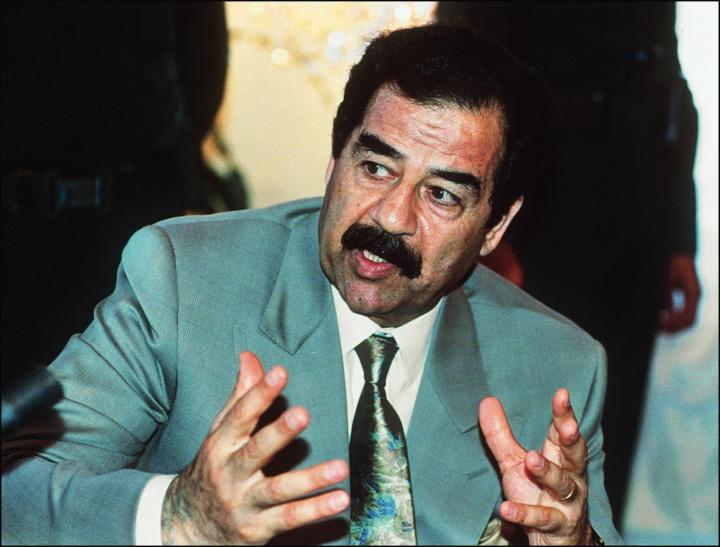
Saddam Husajn fot. z 1990 r.
By spring 1990, Saddam Hussein was desperately seeking a financial solution to his rapidly downward-spiralling economic and political situation. In February of that year at the Arab Co-operation Council in Jordan, the Iraqi leader put forward the idea of a suspension of his country’s wartime debts and the urgent need for extra funding, but his pleas fell on deaf ears among his Arab neighbours. Furthermore, his continual requests for oil quotas to be adhered to in order to halt the slide in the price of oil were also ignored. In fact, the attitude of both Kuwait and the UAE to his calls for a cancellation of wartime debts and more credit were decidedly unhelpful: no debt would be absolved and the only money that Iraq would receive from them would be in the form of charity. This blunt rebuff of Saddam Hussein generated a very dangerous condition for an Arab leader (often underestimated by western politicians) – that of a humiliating loss of face. The collapse of Saddam’s dignity combined with the perilous state of the Iraqi economy brought about a sharp contrast in policy by the summer of 1990.
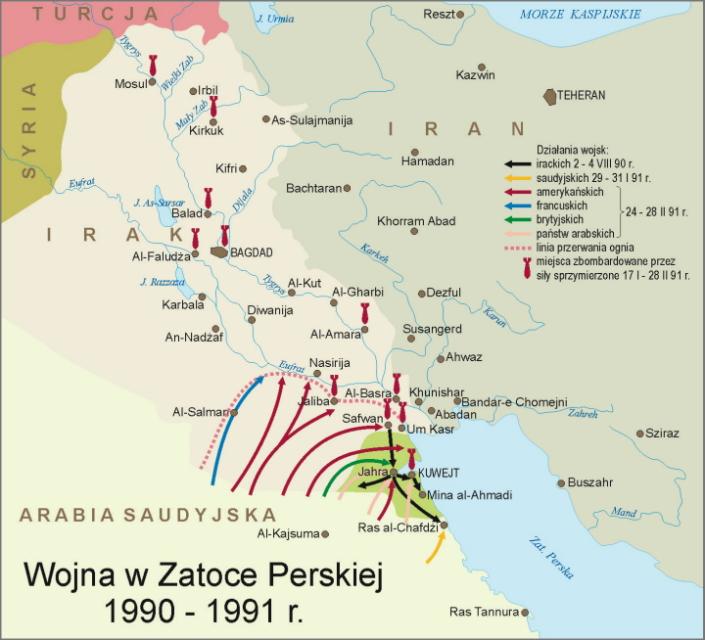
At the height of July, Iraq adopted a dual-track policy of intense diplomacy allied with military manoeuvres near the border with Kuwait. The diplomatic line consisted of a series of accusations of Kuwait: firstly, that it had stolen oil from Iraq’s Rumaila oilfield (near the Iraq–Kuwait border), estimated to be over $2 billion in value, which should be immediately repaid; secondly, that its loans to Iraq in the 1980s were largely from oil profits due to overproduction (exceeding OPEC quotas), which was harming its neighbour; and thirdly, that Kuwait had a long-held secret agenda to acquire Iraqi territory while Iraq was distracted by the fight against Islamic fundamentalism. The proposed Iraqi solution to these crimes encompassed a huge cash rebate, a price hike in oil prices to at least $25 a barrel, the complete suspension of war debts and a comprehensive financial package to aid the economic reconstruction of Iraq. To support his diplomacy, Saddam concurrently started moving large numbers of the élite Republican Guard towards the border with Kuwait; with just under 40,000 troops in position by the 19 July.
At the height of July, Iraq adopted a dual-track policy of intense diplomacy allied with military manoeuvres near the border with Kuwait. The diplomatic line consisted of a series of accusations of Kuwait: firstly, that it had stolen oil from Iraq’s Rumaila oilfield (near the Iraq–Kuwait border), estimated to be over $2 billion in value, which should be immediately repaid; secondly, that its loans to Iraq in the 1980s were largely from oil profits due to overproduction (exceeding OPEC quotas), which was harming its neighbour; and thirdly, that Kuwait had a long-held secret agenda to acquire Iraqi territory while Iraq was distracted by the fight against Islamic fundamentalism. The proposed Iraqi solution to these crimes encompassed a huge cash rebate, a price hike in oil prices to at least $25 a barrel, the complete suspension of war debts and a comprehensive financial package to aid the economic reconstruction of Iraq. To support his diplomacy, Saddam concurrently started moving large numbers of the élite Republican Guard towards the border with Kuwait; with just under 40,000 troops in position by the 19 July.
