https://ospreypublishing.com/thisweekhistory/
Though the uprising never ensued, the relative ease with which the communist forces penetrated to the center of US control in South Vietnam forever altered the perception of the war in the US. Due in part to the extensive media coverage of the battle, the US largely viewed the ‘great victory’ as a major defeat.
The following extract from Essential Histories 38:
The Vietnam War 1956–1975 details General Pham Hung’s motivations for launching the Tet Offensive and provides a summary of the conflict and its aftermath.
The Tet Offensive
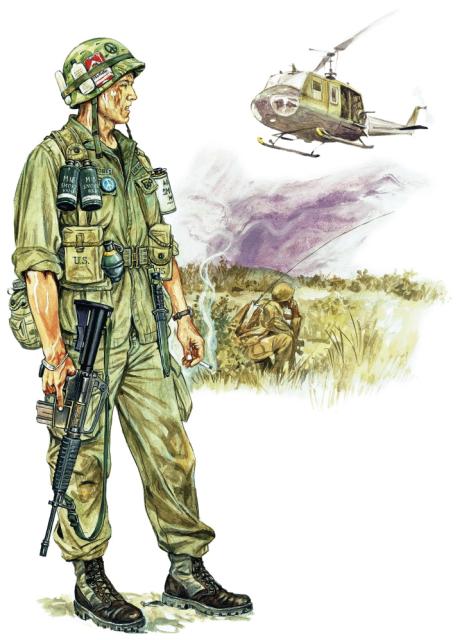
Amerykański szeregowiec z 1. Dywizji Kawalerii Powietrznej w hełmie M1 z pokrowcem maskującym, uzbrojony w karabin XM-177 Commando (krótsza wersja M-16), trzy granaty dymne M-18 i jeden zaczepny M-26 oraz bagnet M-3
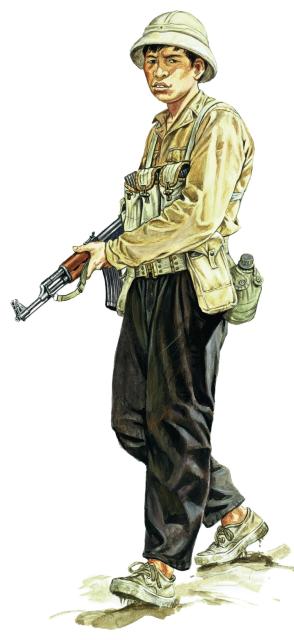
Żołnierz Vietcongu z pistoletem maszynowym AK 47 „Kałasznikow” ≥Schwytany Wietnamczyk brutalnie przesłuchiwany przez Amerykanów, 1967 r.
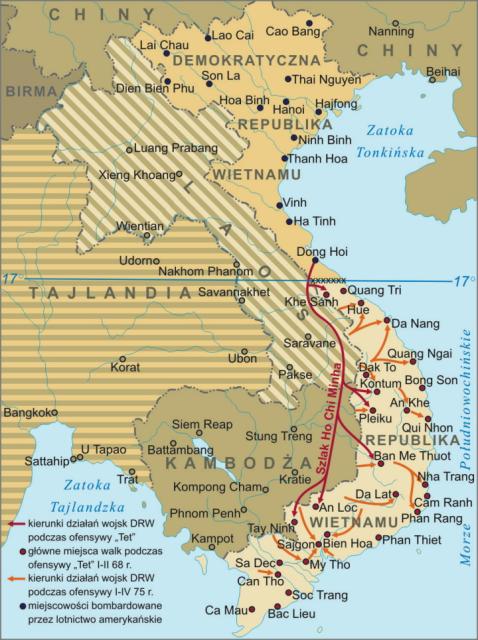
General Pham Hung developed the Tet Offensive as a three-phase plan. In preparation for this massive attack the Viet Cong had, in late 1967, lured US forces into the Vietnamese hinterlands, through a series of attacks and buildups, including the assault on Dak To and the concentration of forces around Khe Sanh. With American forces distant and distracted the Viet Cong began the dangerous task of gathering together a force of 84,000 near the major cities of South Vietnam. By January of 1968 the Viet Cong buildup was complete, and the communists stood ready for their offensive – simultaneous assaults on all of the major cities of South Vietnam, guarded by inferior ARVN opponents. The urban attacks were timed to take place during a ceasefire in celebration of the Tet Lunar New Year. Giap hoped that surprise would lead to initial victories before American troops could react and that seizure of only a few cities would result in the general uprising that would win the war.