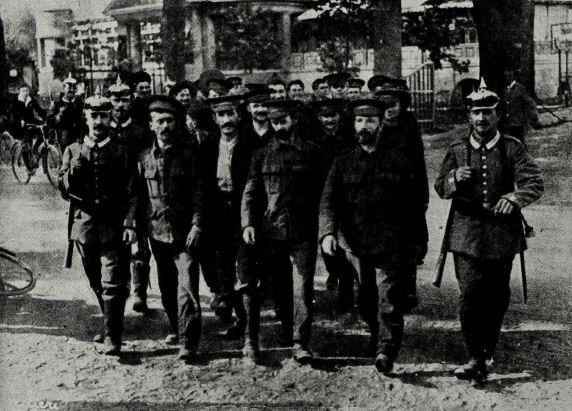
BRITISH PRISONERS OF WAR IN GERMANY SETTING OUT FOR WORK

WITTENBERG CAMP

PARCELS FROM HOME
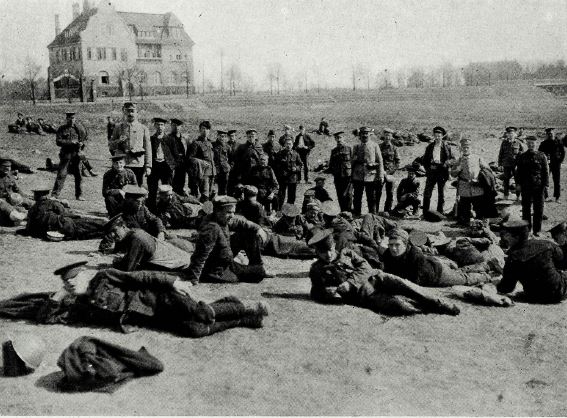
A SPORTS GROUND, BUT NO SPORT.
http://www.thetimes.co.uk/article/british-and-german-prisoners-6mgxsrm23
British and German Prisoners
The British prisoners appear to be singled out from those of other nationalities for harsh and humiliating treatment
April 12, 1915
The treatment accorded to prisoners of war, and particularly to wounded prisoners of war, is justly regarded as a test of the civilization which exists amongst their captors. The savage regards his captives as objects upon which it is his right and his pleasure to exercise his cruelty and his hate. The nations of Christendom, whose customs in warfare are still largely based upon the traditions of chivalry, look upon their prisoners as honourable foes, against whom they cherish no personal ill-will, and to whom honour and self-respect oblige them to extend all the consideration and the courtesy compatible with safe keeping.
The gradual amelioration in the lot of the captured, like the growth of other humane practices in the conduct of war, has been hitherto considered by all peoples who have emerged from barbarism as amongst the chief tokens of the progress of the world. The regulations annexed to The Hague Convention of October 18, 1907, were welcomed by them, as giving a solemn international sanction to principles and practices which the most cultivated nations have long followed during hostilities as a matter of course. It was with wonder and, indeed, with a large measure of incredulity, that the English peoples received the first reports which reached them that the Germans had flung these traditions to the winds, that they were treating British prisoners, and even wounded prisoners, with cruelty and insult, and that they were showing the same contempt for The Hague regulations as for other “scraps of paper”.
We may hope, even still, that some of the stories which have been received are exaggerated, and that the worst conduct described in them has not been general. It seems, however, impossible, in the face of the evidence contained in the recent White Paper, and strongly corroborated from other sources, to doubt that Germany, with all her Kultur, has relapsed into brutalities towards her English captives, without parallel in the modern history of war.
Sir Edward Grey’s dispatch of December 26 and the papers annexed to it, especially Major Vandeleur’s reports, appear to be conclusive in this respect. Major Vandeleur is himself an escaped prisoner, who speaks of what he himself saw and heard. Sir Edward Grey expresses his conviction that the American Ambassador, to whom he forwarded the paper, could not fail to be impressed by its “evident veracity and sincerity”. All who read it, we imagine, will share this impression. The most painful part of the report is that which relates to the journey of the prisoners from the front into Germany. They were constantly abused and reviled. One German officer showed his manliness and breeding by spitting upon a defenceless British officer. Officers and men were herded together into foul horse-boxes. All along the line German officers as well as soldiers cursed them. Their greatcoats were stolen in the bitter cold, and their guards opposed the charitable efforts of the French Red Cross to supply them with food. At one Station Major Vandeleur was dragged out of the wagon, cursed in filthy language by another of these German “gentlemen” wearing the Kaiser’s coat, and then kicked at this brute’s orders by a common soldier. Such are the humanity and the politeness, of which the German military caste, the men who exact from mere civilians amongst their own countrymen cringing respect for their uniform, are capable towards a wounded and defenceless English gentleman.
Only once did Major Vandeleur hear an officer try to restrain the curses of his men. The prisoners were cooped up in these over-crowded and unventilated wagons for three days and three nights. In the Crefeld Camp, where Major Vandeleur was confined, no gross physical hardships are complained of. The officers were overcrowded, and they had, for the most part, to make their own beds and to black their own boots. The treatment of the rank and file imprisoned at other places is described as “barbarous”.
Major Vandeleur’s information in regard to it comes from British orderlies transferred to Crefeld as officers’ servants, and from English and French medical officers. The men were deprived of their greatcoats and their money, and often of their tunics. All the orderlies reached Crefeld crawling with vennin and many were suffering from the itch. They said that they were half-starved, and they looked half-starved. One of the reports by Americans appended to the dispatch declares they are “kept on very short commons”; another that they are pale from want of food and “vermin-ridden”, while the floors of their tents are “a mass of mud”.
Sir Edward Grey draws attention to the fact that the British prisoners appear to be singled out from those of other nationalities for harsh and humiliating treatment. This view is fully borne out by Major Vandeleur. The French prisoners were fed on the terrible journey from the front; the British got the leavings. All the menial and dirty work of the camps is assigned to our countrymen, and Major Vandeleur declares it to be his strong opinion that the particular brutality shown to them on the way there “is deliberately arranged for by superior authority”. The French officers, he states, “were treated quite differently”. This view is supported by the evidence of a Russian doctor and of a French priest.
The report of Mr John B Jackson, of the American Embassy in Berlin, upon the position of German prisoners and interned Germans in this country forms a contrast to these statements, upon which we may look with satisfaction and with pleasure. It shows that we have not been unmindful of what we owe to ourselves and to our opponents. The German officers without exception told Mr Jackson that they “had always been treated like officers and honourable men,” and many of the soldiers informed him that British soldiers had protected them from insult as they passed through France. Nowhere did this neutral observer, who had the fullest opportunities for conversing with the prisoners apart, discover any signs of a desire to make their condition harder or more disagreeable than was necessary. As to “Donington Hall,” it is, he declares, “a beautiful place”. That is the way in which England treats her German prisoners. It is the way in which she would have expected Germany to treat captive Englishmen.
That expectation has been disappointed. Germany has shown no respect for misfortune or for suffering, for rank or for the uniform which, in the past, has everywhere appealed to soldiers’ hearts. She has striven in many cases, and striven, it must be feared, of set purpose to inflict needless pain and undeserved humiliation on our brave countrymen. The degradation is not theirs, but her own.
She has heaped fresh disgrace upon her name, and disgrace which we should have supposed would have been felt with peculiar keenness by a military nation. She has shown that she disregards the common humanities and the honourable courtesies of soldiers to each other, as utterly as she despises the rights of civilians and the obligations of international law.
The gradual amelioration in the lot of the captured, like the growth of other humane practices in the conduct of war, has been hitherto considered by all peoples who have emerged from barbarism as amongst the chief tokens of the progress of the world. The regulations annexed to The Hague Convention of October 18, 1907, were welcomed by them, as giving a solemn international sanction to principles and practices which the most cultivated nations have long followed during hostilities as a matter of course. It was with wonder and, indeed, with a large measure of incredulity, that the English peoples received the first reports which reached them that the Germans had flung these traditions to the winds, that they were treating British prisoners, and even wounded prisoners, with cruelty and insult, and that they were showing the same contempt for The Hague regulations as for other “scraps of paper”.
We may hope, even still, that some of the stories which have been received are exaggerated, and that the worst conduct described in them has not been general. It seems, however, impossible, in the face of the evidence contained in the recent White Paper, and strongly corroborated from other sources, to doubt that Germany, with all her Kultur, has relapsed into brutalities towards her English captives, without parallel in the modern history of war.
Sir Edward Grey’s dispatch of December 26 and the papers annexed to it, especially Major Vandeleur’s reports, appear to be conclusive in this respect. Major Vandeleur is himself an escaped prisoner, who speaks of what he himself saw and heard. Sir Edward Grey expresses his conviction that the American Ambassador, to whom he forwarded the paper, could not fail to be impressed by its “evident veracity and sincerity”. All who read it, we imagine, will share this impression. The most painful part of the report is that which relates to the journey of the prisoners from the front into Germany. They were constantly abused and reviled. One German officer showed his manliness and breeding by spitting upon a defenceless British officer. Officers and men were herded together into foul horse-boxes. All along the line German officers as well as soldiers cursed them. Their greatcoats were stolen in the bitter cold, and their guards opposed the charitable efforts of the French Red Cross to supply them with food. At one Station Major Vandeleur was dragged out of the wagon, cursed in filthy language by another of these German “gentlemen” wearing the Kaiser’s coat, and then kicked at this brute’s orders by a common soldier. Such are the humanity and the politeness, of which the German military caste, the men who exact from mere civilians amongst their own countrymen cringing respect for their uniform, are capable towards a wounded and defenceless English gentleman.
Only once did Major Vandeleur hear an officer try to restrain the curses of his men. The prisoners were cooped up in these over-crowded and unventilated wagons for three days and three nights. In the Crefeld Camp, where Major Vandeleur was confined, no gross physical hardships are complained of. The officers were overcrowded, and they had, for the most part, to make their own beds and to black their own boots. The treatment of the rank and file imprisoned at other places is described as “barbarous”.
Sir Edward Grey draws attention to the fact that the British prisoners appear to be singled out from those of other nationalities for harsh and humiliating treatment. This view is fully borne out by Major Vandeleur. The French prisoners were fed on the terrible journey from the front; the British got the leavings. All the menial and dirty work of the camps is assigned to our countrymen, and Major Vandeleur declares it to be his strong opinion that the particular brutality shown to them on the way there “is deliberately arranged for by superior authority”. The French officers, he states, “were treated quite differently”. This view is supported by the evidence of a Russian doctor and of a French priest.
The report of Mr John B Jackson, of the American Embassy in Berlin, upon the position of German prisoners and interned Germans in this country forms a contrast to these statements, upon which we may look with satisfaction and with pleasure. It shows that we have not been unmindful of what we owe to ourselves and to our opponents. The German officers without exception told Mr Jackson that they “had always been treated like officers and honourable men,” and many of the soldiers informed him that British soldiers had protected them from insult as they passed through France. Nowhere did this neutral observer, who had the fullest opportunities for conversing with the prisoners apart, discover any signs of a desire to make their condition harder or more disagreeable than was necessary. As to “Donington Hall,” it is, he declares, “a beautiful place”. That is the way in which England treats her German prisoners. It is the way in which she would have expected Germany to treat captive Englishmen.
That expectation has been disappointed. Germany has shown no respect for misfortune or for suffering, for rank or for the uniform which, in the past, has everywhere appealed to soldiers’ hearts. She has striven in many cases, and striven, it must be feared, of set purpose to inflict needless pain and undeserved humiliation on our brave countrymen. The degradation is not theirs, but her own.
She has heaped fresh disgrace upon her name, and disgrace which we should have supposed would have been felt with peculiar keenness by a military nation. She has shown that she disregards the common humanities and the honourable courtesies of soldiers to each other, as utterly as she despises the rights of civilians and the obligations of international law.
