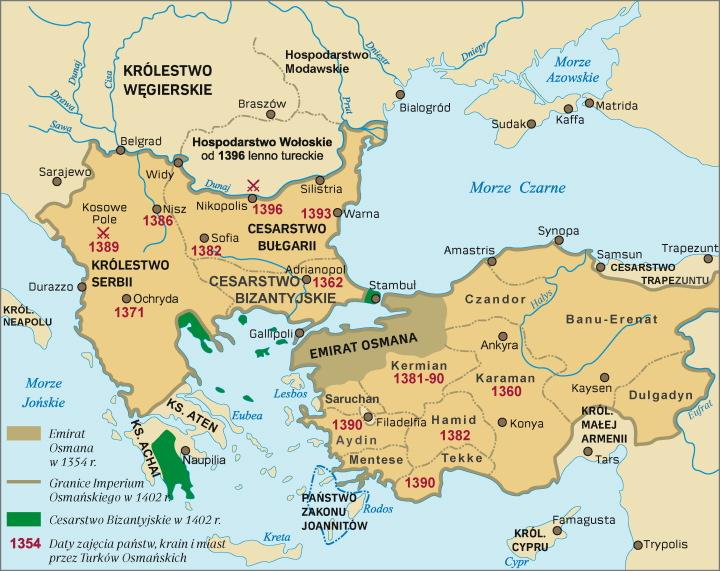
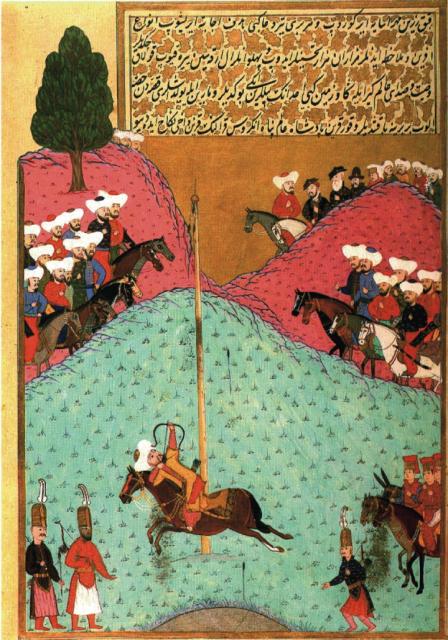
The battle of Nicopolis was the end of the crusades, but also the first encounter between the Ottoman Turks and the soldiers of western Europe. During the second half of the 14th century, the rapid spread of Ottoman Turkish conquests, and particularly the Ottoman threat to Hungary, was causing great consternation in western Europe. Further provocation was provided by the siege of Constantinople, the last remnant of the Byzantine Empire, in 1391 by Sultan Bãyazîd I 'The Lightning'. Pope Boniface IX preached a crusade and soon an army of English, French, Germans, Italians and Knights Hospitallers under the leadership of John of Nevers, son of Philip the Bold, Duke of Burgundy marched east towards Constantinople, joining a Hungarian army under King Sigismund of Hungary on the way. They advanced deep into new Turkish territory, but were halted at the town of Nicopolis, which resisted the Crusader siege for over two weeks.
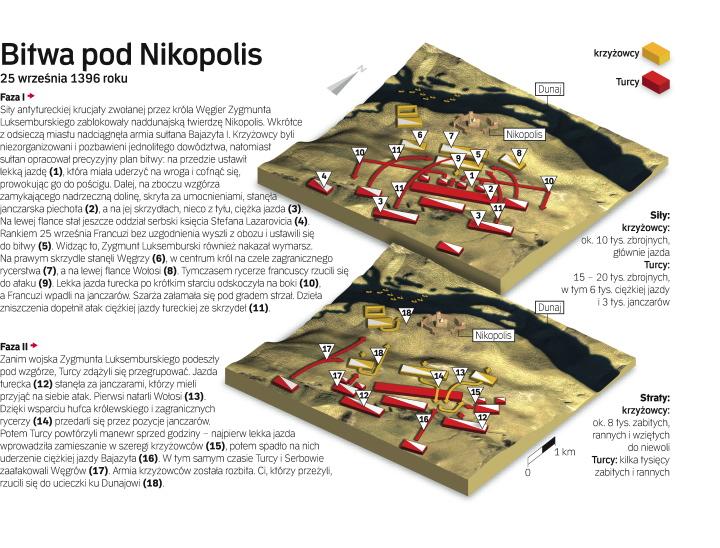
Sultan Bãyazîd decided to march to the town's rescue. He chose a defensive position straddling the road to the city with his flanks protected by ravines. Sigismund advised a cautious approach, but the western crusaders would have none of that. Instead, they charged straight at the Ottomans.
After a fierce battle, the Ottomans were victorious. It was a devastating loss for the Crusaders, particularly as Bãyazîd, enraged by his heavy losses, slaughtered most of his prisoners the next day.


Sultan Bãyazîd decided to march to the town's rescue. He chose a defensive position straddling the road to the city with his flanks protected by ravines. Sigismund advised a cautious approach, but the western crusaders would have none of that. Instead, they charged straight at the Ottomans.
After a fierce battle, the Ottomans were victorious. It was a devastating loss for the Crusaders, particularly as Bãyazîd, enraged by his heavy losses, slaughtered most of his prisoners the next day.