Showing posts with label Угорщина. Show all posts

Friday, 2 November 2018

100 Years Ago


The battle in Flanders

On the front of the Allied attack in the north which began yesterday we continue to push the enemy back upon the line of the Scheldt, while in the Valenciennes area we have forced our way so closely up to the southern edge of the city that you may hear tonight that Valenciennes is in our hands. The position of the Germans there must now be nearly intolerable. A characteristic item of the booty taken in the southern area was a party of four German ambulances which, having a legitimate load of wounded on the beds below, were laden above with booty plundered from the villages.
Pushing up behind our troops, our guns have been industriously shelling enemy troops and transport on the roads. On our immediate left the French troops had some trouble with strong positions in Anseghem Chateau. The place was full of machine-guns, and the Germans fought stubbornly, and it was not until after hand-to-hand fighting that they finally got possession. On the left of the French, American troops seem to have had the hardest fighting. The woods were strongly held, and protected with wire and machine-guns, but, working like old soldiers, the Americans made their way round, and those of the garrison who were not killed or escaped were made prisoners.
All this country is thickly settled, and the Germans last night had set a number of farms on fire, which kept the hours of darkness brilliant and made the advance of the French and Americans in the early morning very easy. In other farms and hamlets are large numbers of civilians, and the Germans, falling back, fought from and among the buildings in Boer fashion. We hesitated to use the guns because of the innocent inhabitants, and the infantry therefore had to go forward without artillery, and the work was done by individual fighting with rifle and bayonet.
The Germans, as they fall back, shell with gas the farms and villages where civilians are. Our men do all they can to protect civilians by giving them gas masks, which they strip from German prisoners, and are trying to make them get out of the area; but it is difficult to persuade civilians not to cling to shelters in cellars and so forth, which have so far proved their salvation, but where it is impossible for them to live always in their masks.

Tuesday, 25 September 2018

This Week in History - Nicopolis (22-28 September 1396

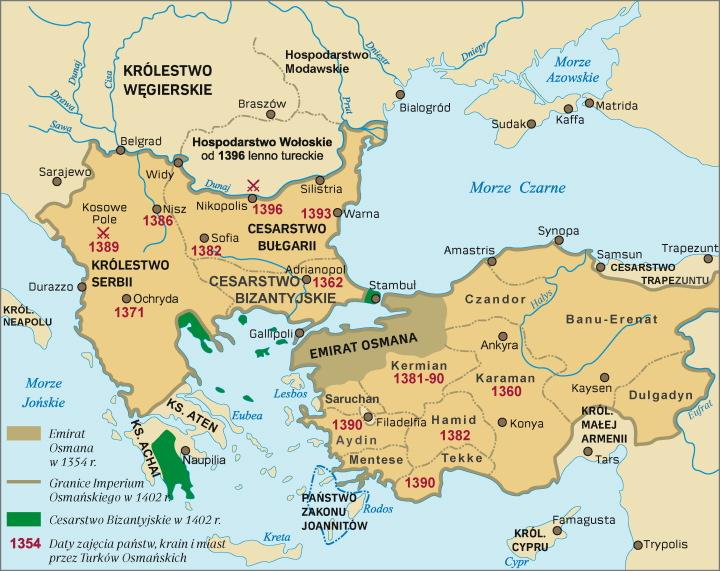
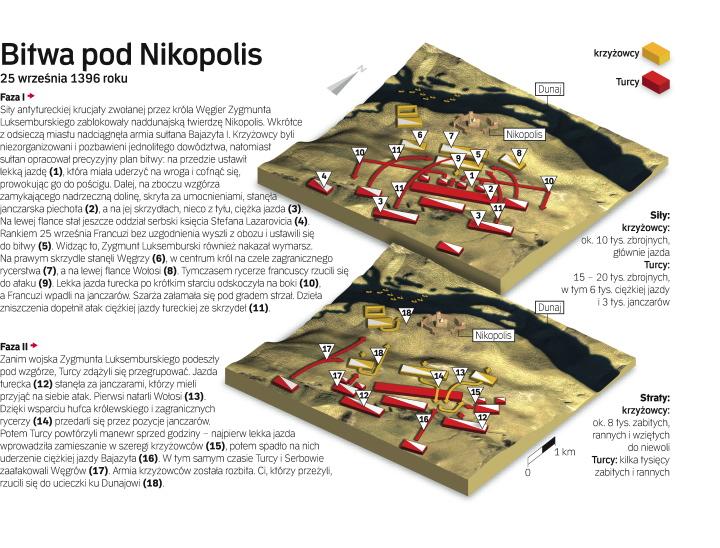
The battle of Nicopolis was the end of the crusades, but also the first encounter between the Ottoman Turks and the soldiers of western Europe. During the second half of the 14th century, the rapid spread of Ottoman Turkish conquests, and particularly the Ottoman threat to Hungary, was causing great consternation in western Europe. Further provocation was provided by the siege of Constantinople, the last remnant of the Byzantine Empire, in 1391 by Sultan Bãyazîd I 'The Lightning'. Pope Boniface IX preached a crusade and soon an army of English, French, Germans, Italians and Knights Hospitallers under the leadership of John of Nevers, son of Philip the Bold, Duke of Burgundy marched east towards Constantinople, joining a Hungarian army under King Sigismund of Hungary on the way. They advanced deep into new Turkish territory, but were halted at the town of Nicopolis, which resisted the Crusader siege for over two weeks.

Sultan Bãyazîd decided to march to the town's rescue. He chose a defensive position straddling the road to the city with his flanks protected by ravines. Sigismund advised a cautious approach, but the western crusaders would have none of that. Instead, they charged straight at the Ottomans.
After a fierce battle, the Ottomans were victorious. It was a devastating loss for the Crusaders, particularly as Bãyazîd, enraged by his heavy losses, slaughtered most of his prisoners the next day.


Thursday, 13 September 2018

The Times History of the War - Austria-Hungary: the last years

Austria-Hungary: the last years
This week's chapter explores the murder of Count Sturgkh, the death of Emperor Francis Joseph, Dr Von Koerber the Austrian Premier, the Ausgleich, the Emperor Charles, political changes, Count Czernin the minister of Foreign Affairs, effects of the Russian Revolution, peace currents, the Reichsrat summoned, the resignation of Count Tisza, letter of the Emperor to Prince Sixte of Bourbon, Austrian victories in Italy, the peace of Brest-Litovsk, Polish problems, Allied victories in France, effects in Austria-Hungary, Austro-Hungarian peace note
The Peace Note of September 14, 1918, may be treated as the conclusion of Austria-Hungary's existence as a European Power, its first step on the road to unconditional surrender, and the opening of the revolutionary period which destroyed both the Hapsburg dynasty and its realm


Austrian attack on Italian front
JUNE 16, 1918
THE EMPEROR CHARLES AND 'THE GERMAN EMPEROR DISCUSS THE OPERATIONS ON THE PIAVE IN FEBRUARY, 1918
It will be interesting to see what effects the battle may have upon the acute internal problems which are pressing upon the framework of the Dual Monarchy
The long-expected Austrian attack upon the Italian front began on Saturday, and is now raging along the whole line of over 70 miles, from the Asiago plateau, where our soldiers are stationed, to the sea. It was delivered in great strength and pressed with much determination. Last night’s Italian report indicates that our Allies are gallantly holding their own. The large force employed by the enemy may be inferred from the fact that no fewer than four Austrian divisions were used in an attempt to dislodge the British contingent. After a brief semblance of success, it completely failed.

Favoured by the heavy mist and the configuration of the ground, the enemy at first penetrated the left of our position on a front of somewhat under a mile and a half to a depth of about a thousand yards. He was beaten off, and by nightfall we had driven him back on the left and returned to our original line. The French to our right appear to have had a similar experience. The greater part of the attack naturally fell upon the long front held by our Italian Allies. The outcome is given in General Diaz’s communique. The struggle is continuing with unabated fury, but his troops are holding firmly on the Asiago plateau, and are closely pressing the enemy infantry which had crossed the Piave.
The plan of the enemy seems to have been to press down the Brenta valley and the Val di Stagna and so to break into the plain of Vicenza by way of Bassano, and at the same time to force his way across the Piave. His “initial rush,” as General Diaz calls it, enabled him to carry a few front line positions both on the mountain and on the river lines.
There is nothing novel about this scheme. What is new is the unprecedented scale. It will be interesting to see what effects the battle may have upon the acute internal problems which are pressing upon the framework of the Dual Monarchy. It is a desperate attempt to keep up the waning spirits of such elements of the population as still remain faithful to the established institutions of the State. While Austria-Hungary is torn by controversies which threaten widespread insurrections, the Italian people are meeting the ordeal to which they are exposed with a unity and a calm courage that make us prouder than ever of our Allies.

Tuesday, 13 February 2018

Hungarian Military Museum (2) 1848-49


Budapest - Hungarian Military Museum - 5 yrs ago


Друга візита за 20 років. На жаль, за годину до закриття, а зали із стрілковкою і періоду 1919-48 закрили взагалі за півгодини до закриття музея - бабулькам теж додому треба, ўсьо пойнятно... А зали до 1815 року на ремонті... Ну може через ще 20 років таки доберуся... Перші дві гармати - несподівано китайські, 18 ст - трофеї столітньої давності миротворчої місії тодішнього еквіваленту ООН


Thursday, 21 September 2017

This Week in History - Nicopolis (22-28 September)

https://ospreypublishing.com/thisweekhistory/


The battle of Nicopolis was the end of the crusades, but also the first encounter between the Ottoman Turks and the soldiers of western Europe. During the second half of the 14th century, the rapid spread of Ottoman Turkish conquests, and particularly the Ottoman threat to Hungary, was causing great consternation in western Europe. Further provocation was provided by the siege of Constantinople, the last remnant of the Byzantine Empire, in 1391 by Sultan Bãyazîd I 'The Lightning'. Pope Boniface IX preached a crusade and soon an army of English, French, Germans, Italians and Knights Hospitallers under the leadership of John of Nevers, son of Philip the Bold, Duke of Burgundy marched east towards Constantinople, joining a Hungarian army under King Sigismund of Hungary on the way. They advanced deep into new Turkish territory, but were halted at the town of Nicopolis, which resisted the Crusader siege for over two weeks.


Sultan Bãyazîd decided to march to the town's rescue. He chose a defensive position straddling the road to the city with his flanks protected by ravines. Sigismund advised a cautious approach, but the western crusaders would have none of that. Instead, they charged straight at the Ottomans. After a fierce battle, the Ottomans were victorious. It was a devastating loss for the Crusaders, particularly as Bãyazîd, enraged by his heavy losses, slaughtered most of his prisoners the next day.

Further reading

For the full story of the last crusade, Campaign 64: Nicopolis 1396 The last Crusade (extract below) is a detailed account. Campaign 132: The First Crusade 1096-99 Conquest of the Holy Land is a new book giving the account of the very first crusade, three hundred years previously. To set Nicopolis against its background of three centuries of crusading, Essential Histories 1: The Crusades gives an overview of the entire period, and discusses the causes, context and consequences of the Crusades. For the Ottoman perspective of Nicopolis, turn to Essential Histories 62: The Ottoman Empire 1326-1699. Finally, for more information about Hungary in the last Crusade, and the subsequent fortune of Eastern Europe, Men-at-Arms 195: Hungary and the fall of Eastern Europe 1000-1568 is a detailed study.

Men-at-Arms 75: Armies of the Crusades, Elite 19: The Crusades, Men-at-Arms 155: Knights of Christ, and Men-at-Arms 125: The Armies of Islam 7th-11th Centuries cover the various armies involved in the crusading period. For information about the specific armies at Nicopolis, turn to Warrior 41: Knight Hospitaller (2) 1306-1565, Men-at-Arms 144: Armies of Medieval Burgundy 1364-1477 and Men-at-Arms 140: Armies of the Ottoman Turks 1300-1774.