Showing posts with label Японія. Show all posts

Monday, 15 October 2018

This Week in History - Sekigahara (17-23 October 1600)

https://ospreypublishing.com/thisweekhistory/


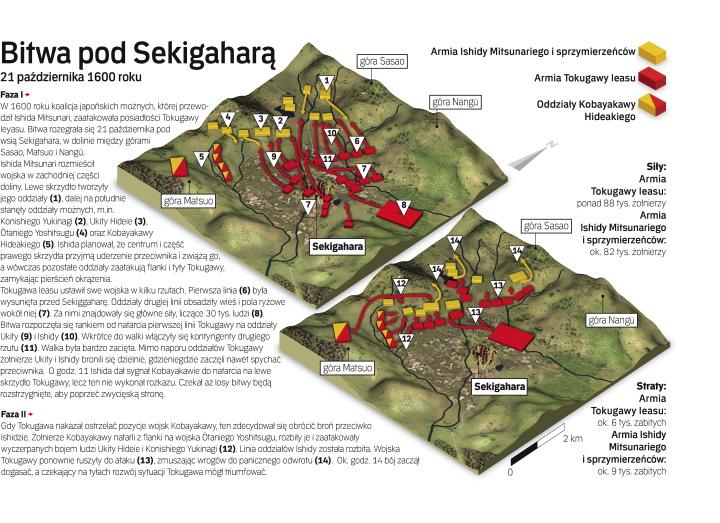
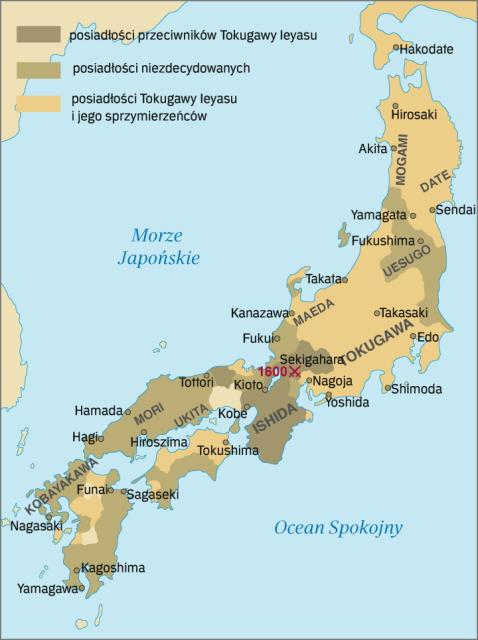
The battle is described in detail in Campaign 40: Sekigahara 1600 The Final Struggle for Power and placed fully in the context of the 150 years of war that it brought to a close in Essential Histories 46: War in Japan 1467-1615, (extract below). An earlier major clash of between rival samurai, which extended to five battles over 11 years, is vividly chronicled in Campaign 130: Kawanakajima 1553-64 Samurai power struggle (published next month).

An Extract from Essential Histories 46: War in Japan 1467-1615
The triumph of the Tokugawa
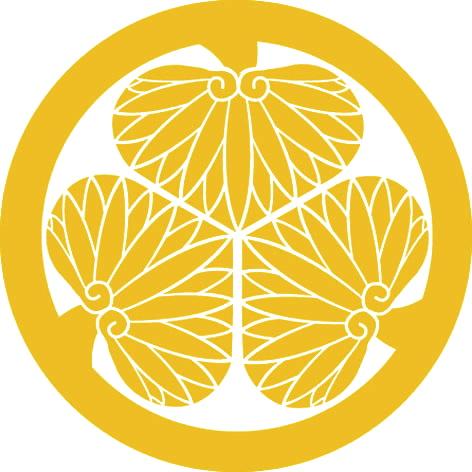
Following the successful outcome of the siege of Odawara in 1590, Tokugawa Ieyasu was granted the Hojo territories in fief, and moved his capital to Edo. The distance of his domains from Kyushu allowed him to avoid service during the invasion of Korea - a futile and bloody war that sapped the strength of many of his contemporaries. The invasion had ended when Hideyoshi died in the manner that all dictators dread, leaving his infant son Toyotomi Hideyori to inherit newly unified Japan. The daimyo who had survived or avoided the decimation of the Korean War then divided into two armed camps and fought each other at the famous battle of Sekigahara in 1600. On one side was a coalition under the command of Ishida Mitsunari, who supported the cause of the infant Hideyori. They were called the Western Army. Opposing them was Tokugawa Ieyasu, who believed that only he had the resources to manage the newly unified empire. His supporters were called the Eastern Army, and they marched towards Osaka from Edo.

Thursday, 1 March 2018

100 Years Ago - Siberia, Palestine, London


https://www.thetimes.co.uk/edition/register/spring-on-the-battlefront-6jbtpp7np


Spring on the battlefront

Whatever the future may have in store, we know, at least, that the talk of a German offensive in February was untrue. The month ends in quietness, and the front remains devoid of anything but local incidents, such as raids, sudden flurries of artillery or trench mortar fire, and, when the weather favours, bursts of aerial activity, in which we still hold markedly the upper hand.
The chief feature of the minor operations so far has, perhaps, been the increasing use of gas shells on both sides. Whatever truth there is in the alleged German desire, through Geneva, to obtain a discontinuance of the use of gas, it is certain they very much dislike our present gas shells. An order recently issued to the German Army informs all ranks that the British have invented eight new kinds of gas, and offers rewards for the salvage of unexploded shells for analysis. From lack of rubber, the Germans have been compelled to substitute leather in the construction of gas masks. The authorities are trying to persuade the soldiers that the change was made because rubber was found not to be impermeable to our gas. They fail to add that, if the rubber mask is not impermeable, a leather one is much less so, but the German soldiers understand, and have generally little confidence in the present masks. Though the German divisions on the Western front are more numerous than this time last year, the trench or bayonet strength of a German division is 25 per cent less than it was in 1916.
Whatever the Germans are doing, Nature, in France, is certainly preparing her great spring offensive. In spinneys and sheltered places, daffodils, dwarf periwinkles, celandine, and wood anemones are all in flower, nearly a month ahead of last year, and shrubberies are greening with leaf buds. On warm days the woods have been ringing to the spring song of the chaffinches and the insistent calling of the green woodpeckers, and the first brimstone butterflies are on the wing. Even close to the front line in areas not devastated there is evidence that the earth is stirring in its winter sleep, and the sunshine makes some alleviation of the almost intolerable hideousness of trench life, for enduring which, with the spirit in which they do, the nation can never sufficiently repay her soldiers.

Monday, 5 February 2018

This Week in History - Guadalcanal (9 February)

https://ospreypublishing.com/thisweekhistory/


Following over five months of bitter fighting on this virtually unheard of island in the Pacific, the US shattered the myth of Japanese invincibility, stopping the apparently irresistible Japanese advance in its tracks. Although the battles of Midway and the Coral Sea are described as turning points, it was at Guadalcanal that the Japanese offensive was ground to a halt. Following their defeat there were no other advances made by the Japanese in the Pacific. Victory came at a price, however: by the end of the campaign American and Japanese casualties topped 30,000.

The battle was unique for several reasons. Throughout the battle – the longest one fought in the Pacific campaign – both forces were fighting at the farthest end of their supply lines. Tropical illnesses, the harsh climate and the rough terrain were an enemy to both sides. Ship losses off Guadalcanal were so great that the waters along the north coast would become known as ‘Iron Bottom Sound’.

Monday, 20 November 2017

This Week in History - The Siege of Tarawa (21-27 November)

https://ospreypublishing.com/thisweekhistory/

The island of Betio in the Tarawa Atoll was defended by the elite troops of the Special Naval Landing Force, whose commander, Admiral Shibaski, boasted that 'the Americans could not take Tarawa with a million men in a hundred years'. In a pioneering amphibious invasion, the Marines of the 2nd Division set out to prove him wrong, overcoming serious planning errors to fight a 76-hour battle of unprecedented savagery. The cost would be more than 3,000 Marine casualties at the hands of a garrison of some 3,200. The lessons learned would dispel forever any illusions the Americans had about the fighting quality of the Japanese.
Campaign 77: Tarawa 1943 describes the strategic location of Tarawa:

Lying some 2,500 miles (4,020km) southwest of Hawaii and 1,300 miles (2,100km) southeast of Truk, Tarawa had a unique location. To the north and west lay the Marshall and Caroline Islands, while south and east were the Allied-held bases. As the most southerly point in Japan's outer defense ring it held a pivotal position on the lifeline from Hawaii and the United States to the South Pacific, Australia and New Zealand. It was vital that this lifeline be maintained and most Allied operations in 1942 and early 1943 were conducted to that end. The invasion of Guadalcanal in 1942 and the operations in Papua New Guinea steadily rolled back the Japanese forward positions that threatened Australia.
Initially the Marshall Islands were to have been the first objective in the central Pacific drive. Ceded to Japan after the First World War, little was known of their defenses, but they were believed to have been strong and the garrison large. The relatively close proximity of Truk posed a threat of land and naval intervention and Spruance and his planning team were reluctant to take the risk in what was to be the Marines' pioneering amphibious assault against the enemy. America was frantically rebuilding its navy after the Pearl Harbor attack, but it was still not strong and the landing force would rely heavily on obsolete ships for support. The decision was made to assault an island that could be readily taken with whatever resources were available at the time; a flawed decision as events were subsequently to prove.
The Gilberts had until recently been British territory and the Americans had access to a wide range of up-to-date information about the islands from British and Commonwealth expatriates. At a conference in Hawaii in September 1943, Operation Galvanic: the invasion of Tarawa, Makin and the small island of Apamama, was formulated and the first 'island hopping' operations were approved.
At this stage of the war nobody knew if such a complex and perilous undertaking would succeed at all or at what cost. It was the task of the Marine Corps 2nd Division to find out.


Further Reading

Campaign 77: Tarawa 1943
Provides a detailed account of the US Marines’ invasion of Tarawa, a 76-hour battle of unprecedented savagery.

Essential Histories Specials 3: The Second World War—A World in Flames
Tells the stories of the men and women who lived and died during the Second World War and assesses the political, military and historical significance of the war.

Battle Orders 7: US Marine Corps Pacific Theater of Operations 194344
Examines the development of the structure of the Marine Corps in the period 1943–44, its training, tactics, weaponry, and command infrastructure as well as the battles fought in the Southwest Pacific on New Britain, and in the Central Pacific on Tarawa, Roi-Namur, Eniwetok, Saipan, and Tinian.