Showing posts with label Британська імперія. Show all posts

Monday, 19 November 2018

103 Years Ago


http://www.thetimes.co.uk/tto/archive/first-world-war/article4617559.ece

Wife’s emotion in identity case

On this day: Nov 19 1915

At Manchester Assizes yesterday George Parkin Hall, alias Herbert Dandy, a soldier, was found guilty of an offence against Mrs Dandy, of West Gorton, and was sentenced to three years’ penal servitude. It was alleged that he personated the woman’s husband, Sergeant Dandy, a soldier serving at the front, and having succeeded in convincing her that he was really Dandy, stayed with her for several days. Hall, aged 37, was dressed in civilian clothes, and pleaded “Not Guilty”. 

Mr F Brocklehurst, prosecuting, pointed out that the facts of the case were peculiar. Hall bore a resemblance to Sergeant Dandy, who went out to Egypt with the 8th Manchesters last year. He presented himself to Mrs Dandy at her shop in July last, and represented that he was her husband. She doubted him at first, but after he had explained that his looks had been altered by his lying on a battlefield unattended for 72 hours, and that he could not remember domestic details as he had lost his memory, and after her relatives had assured her that he was her husband, she believed him and cohabited with him for several days. Then she again doubted him, and ceased to acknowledge him as her husband. Later it became known that the accused was named Hall, that he had a wife in Manchester, and that he only enlisted this year. 

Mrs Dandy in evidence told how the prisoner called at her shop in July and said he was her husband. Owing to his changed appearance she exclaimed “Never,” but he explained that the cause of the change was what he had gone through whilst serving abroad. Sergeant Dandy had an abscess mark on his neck, but Hall said it had been filled in. Dandy also had tattoo marks on his arm, and the prisoner explained their absence by saying they had been burnt out. 

Upon being cross-examined, Mrs Dandy burst into tears and sobbed convulsively. She exclaimed, “I have had nine children in ten years. I have never known wrong in my life, and never thought of a man apart from my husband, and all after my poor husband is laid below.” 

After the verdict Hall pleaded for leniency on the ground that he has six children and had been in gaol 13 weeks. The Judge, however, declared that he had committed a most impudent and deliberate crime.

Tuesday, 23 October 2018

This Week in History - El Alamein (23 October-3 November 1942)

https://ospreypublishing.com/thisweekhistory/

El Alamein (23 October-3 November)


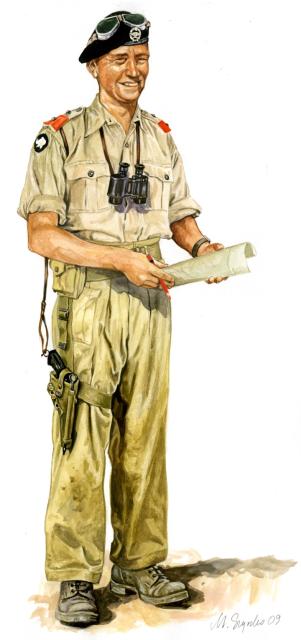
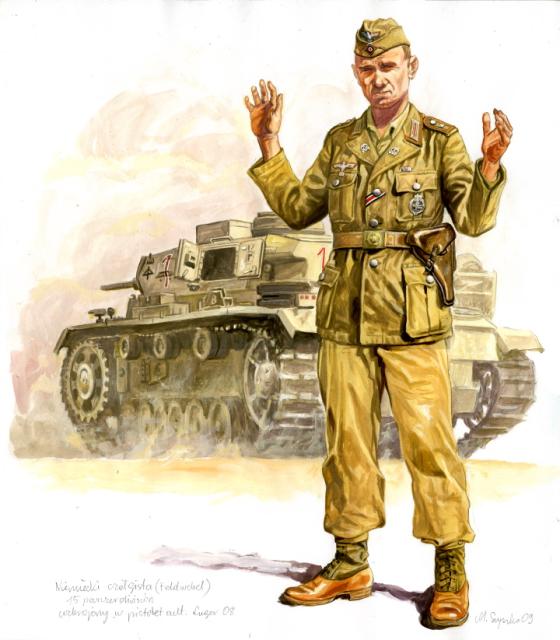
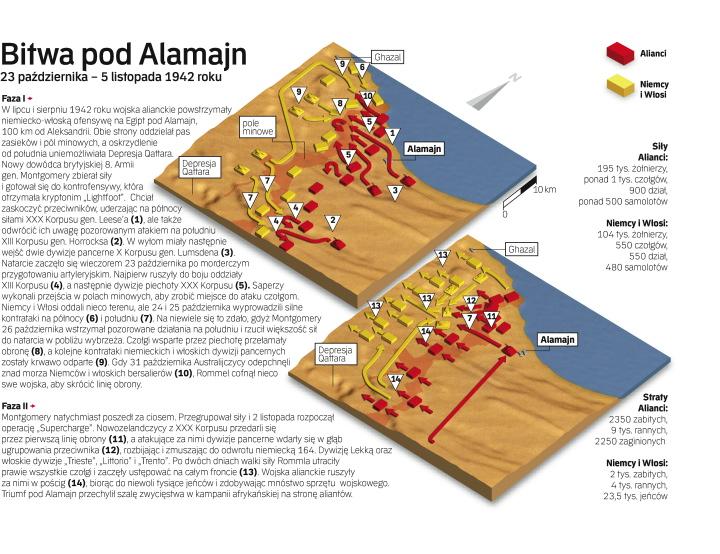
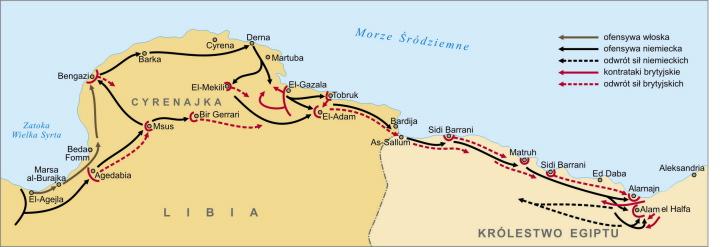
Following the First Battle of El Alamein, which had stalled the Axis advance, General Bernard Montgomery took command of the British Commonwealth’s Eighth Army in August 1942. The Second Battle of El Alamein marked a significant turning point in the Western Desert Campaign of World War II. The battle lasted from 23 October to 3 November 1942, and began with the major offensive Operation Lightfoot.

With Operation Lightfoot, Montgomery hoped to carve two corridors through the Axis minefields in the north. Allied armour would then pass through the Axis defences and defeat Rommel’s German armoured divisions. Diversionary attacks in the south would keep the rest of the Axis forces from moving northwards.

Success in the battle turned the tide in the North African Campaign. Allied victory at El Alamein ended German hopes of occupying Egypt, controlling access to the Suez Canal, and gaining access to the Middle Eastern oil fields.


Thursday, 18 October 2018

The Times History of the War - End of Near East campaigns

End of Near East campaigns
This week's chapter examines events preceding the collapse of Turkey, last campaign of the Russian Caucasian Army, effect of Bolshevist revolution, rivalry of Georgians, Armenians and Tartars, Turks Pan-Turanian ambitions, Germany's "new route to India", Turks at Erzerum, Kars, Batum and Tabriz, Germans at Tiflis, Nuri's advance on Baku, British intervention, events in Mesopotamia, replacing Russians on the road to the Caspian, Dunsterville's defence of Baku, helping the Nestorians, Baku reoccupied, Sir Percy Sykes's great march, German intrigues at Kabul, British at Merv, Persia's debt to Great Britain, Turks sue for terms, Enver and Taalat resign, armistice signed, through the Dardanelles to Constantinople, Russian Black Sea Fleet surrendered, plight of the Armenians
Every British officer in the Punjab regiment had fallen in the assault, and when the Bolshevists came on, the Indians were exposed to attack from three sides - frontally down the line, on the right flank by troops who had rallied apparently realizing our inferiority in numbers, and in the rear by a Bolshevist armoured train. The Indian officer of the Punjabi battalion put up a splendid fight and refused to retire without orders

Tuesday, 9 October 2018

Major-General Sir John Swinton obituary

https://www.thetimes.co.uk/edition/register/major-general-sir-john-swinton-obituary-d6vkzjmfc

Distinguished Scots Guardsman who wanted his daughter Tilda to marry a duke but watched her become an Oscar-winning actress
Swinton while commanding the Scots Guards in 1970
The only misadventure John Swinton’s false lower leg encountered during 34 years of active military service after the war was when its owner’s eight-year-old son fired a .22 shot through it by mistake during a shoot. Indeed, Willie Swinton succeeded where Malayan insurgents and Greek-Cypriot terrorists had failed during John Swinton’s distinguished postwar military career.
The guardsman’s lower left leg had been severed by a mortar splinter in the last days of the Second World War, but his return to active service was not long delayed. The outbreak of the insurrection in Malaya in 1948 called for urgent reinforcements of infantry to counter the campaign of murder and extortion launched by the communist terrorists.

Tuesday, 2 October 2018

The Times History of the War - The Conquest of Syria

The Conquest of Syria
This week's chapter examines the Turks expelled from Arabic vilayets, opposing forces in Palestine, Allenby's strategy, the battles of Sharon and Mount Ephraim, the great cavalry ride, Von Liman's narrow escape, work of the Air Force, two Turkish armies destroyed, the East Jordan operations, from Galilee to Damascus, Syrian seaports seized, Homs occupied, the advance to Aleppo, tasks of political department, Marshall's victory on the Tigris, two years at Aden, the surrender of Medina
The Germans had fired great dumps of ammunition, petrol, and the hangars and workshops on the aerodromes at our approach. But one plane was seized intact, and close by was found a big cave containing thousands of bottles of champagne and other wines and spirits


How Nazareth was captured
The cavalry of General Allenby's Army swam and forded the Jordan north of Lake Tiberias last night
Yesterday I spent a couple of hours at Nazareth with the West Country Yeomanry who first entered the town. The capture of the place was highly dramatic. The Yeomanry crossed Esdraelon Plain in the dark, having covered fully 60 miles from the Jaffa district within 24 hours. Trotting up the steep, tortuous roadway to Nazareth just before the dawn they overran a moving convoy of 75 motor-lorries. The German drivers were greatly startled at the apparently miraculous appearance of our horsemen, and in the confusion which followed a number of the lorries were overturned off the narrow mountain road. Maintaining their place, the Yeomanry clattered over the crest into the little hilltop basin where Nazareth lies.

The town contained numerous enemy troops. These, like the inhabitants, were still sleeping, believing the line unbroken and our Army many miles away. The Yeomanry quickly made the whole force prisoners. The British, however, were only a small party, and when later in the day the German machine-gunners from the ridges round the town to the north opened a vigorous fire, they temporarily withdrew.
The following morning they outflanked the machine-gun posts and re-entered Nazareth. That night the Turks counter-attacked, but meanwhile our force was strengthened by some Indian Lancers galloping out, who killed 50 and took 100 prisoners in a slashing moonlight charge. The inhabitants expressed the greatest delight at the arrival of the British.
Returning from Nazareth I came across an armoured motor battery and light car patrol proceeding on a flying reconnaissance to Haifa and joined the enterprise. The little expedition was marked by splendid dash and daring. Speeding over the hills of Lower Galilee, we crossed the Esdraelon Plain and then ran east under the shadow of Mount Carmel. When we were many miles in advance of our outposts and three miles from Haifa we encountered an enemy post, and after a brief engagement we captured 70 prisoners, including two officers.
Over the next two miles our prisoners increased to upwards of 100. Armoured cars pushed impudently into the outskirts of the town. Despite the heavy fire from enemy batteries and machine-guns and rifle fire at point:blank range, the mission was fully accomplished. The cars pulled out slowly, marching the prisoners before them,. all the while fighting a vigorous rearguard action.
The remarkable success of Allenby’s bold strategy is largely due to the complete ascendancy of British airmen. Towards this the Australian squadron very substantially contributed. For a fortnight preceding the advance the enemy was kept practically blind. Scarcely a single German machine crossed our line, and any machine which came was immediately challenged and destroyed or chased right home to his aerodrome. Simultaneously all enemy aerodromes were being bombed, as we now know from personal observation, almost out of existence. The Australian part in this work is demonstrated by the fact that 12 Distinguished Flying Crosses were awarded to our men in six weeks.
TURKS FIGHT TO SAVE DAMASCUS
The cavalry of General Allenby’s Army swam and forded the Jordan north of Lake Tiberias last night, and today captured the high ground east thereof. The situation is developing most favourably.
The mounted troops hold a far-flung line, the horsemen converging in two great columns on the main Damascus roads. From the south Yeomanry and Indian cavalry moving eastwards. from Beisan have taken Irbid, where a portion of the Turkish Fourth Army not destroyed at Amman intended to stand. The important railway junction of Deraa having been secured, the Arabs on our east, ignoring the bodies of the enemy between Deraa and Amman, marched north on Sheikh Miskin, which is within one cavalry bound of Damascus.
In going forward the cavalry several times left enemy parties in their rear in order to reap the full results of their bold strategy, the advancing infantry clearing. the enemy out of isolated places, as, for instance, in the Yarmuk Valley, where Germans and Turks were holding positions on the railway after Deraa had been taken. The infantry dealt with them and prevented the destruction of some useful railway works.
The Turks, in fear of designs on Damascus, sent down to the Jordan from that city a force composed of Germans, Turks, and some Circassians. When our cavalry were opposite the bridge at Benat Yakub, motor lorries from Damascus had deposited a thousand men on the steep eastern bank of the Jordan, covering the bridge with machine-guns.They blew up the centre arch of the 400-year-old bridge, making a crossing there impossible. A brigade of Australian Light Horse swam the river with the horses farther south, another Australian brigade making a passage of the river to the north. The ground approaching the river was marshy, but so swiftly were the difficulties surmounted that before the enemy could scramble back to their lorries 200 Turks, 50 German, three field guns, and some machine guns were cut off and captured.
At 6 this morning the cavalry were at Dar Ezaras, astride the Damascus road, and have since advanced to El Kuneitra, within 40 miles of the ancient city. It is an interesting race between the two columns as to which will reach the coveted point first. One cannot move a mile in this rough, desolate hill country without marvelling at the endurance of the troops.

Thursday, 16 August 2018

100 Years Ago


One of the finest fights the Canadian cavalry have been in was on Sunday morning on the Amiens-Roye road, between Goyencourt and Andechy. Two giant pill-boxes of heavy steel and cement stand sentinel over the main road and two cross-roads. They held up our infantry during the first Somme advance, and although the concussion from our heavy shells killed most of the garrisons, the forts were not destroyed. After the advance they were strengthened, and used for defence in the March Allied retirement. A hasty attempt to blow them up was unsuccessful.
Now, they once more frowned on the attacking troops. A force of Canadian cavalry divided into small parties and spread over tracks which led towards the redoubts. The German outposts were surprised and killed, and there seemed a chance of gaining the position by surprise. The garrison’s attention was taken up by minor fights on either side, when suddenly a party of the Canadian cavalry charged down the main road to within 50 yards of the little forts, when they encountered barbed wire and were held up. They had considerable losses in men and horses from machine-gun fire. The mounted men galloped to shelter, but the troopers who had been dismounted, sheltered by their dead horses and what cover they could get, went on cutting wire. With a semblance of a path cut through, the cavalry commander, in conjunction with some whippet Tanks, launched another party. Guided by their unmounted comrades, the troops got through the first wire and were right on top of the positions. They fired point-blank into the little forts, and then swerved to the right into the shelter of a small wood. There were a considerable number of casualties, but the German garrisons, panic-stricken at the closeness of the horsemen and afraid of being cut off, fled out through the rear trenches. The gaining of the position meant everything to the British and French infantry. It was one of the hardest fights Canadian cavalry have been in during this tremendous battle.
The motor machine-gunners have a new mascot in a fine Dachshund bitch they took from a dugout where she refused to leave the body of her master, an officer. She is suffering from shell shock and whines at every explosion, but the unit means to bring her back to Canada.

Monday, 13 August 2018

Sir VS Naipaul obituary

Nobel prizewinning author whose books posed profound questions about the postcolonial world

VS Naipaul in 2001, the year he was awarded the Nobel prize for literature
Did VS Naipaul set out to cause offence, or did it happen by accident? Few would take issue with the Nobel prizewinner’s immense talent as an author, yet he also succeeded in getting up the noses of almost everyone he encountered, becoming English literature’s greatest postcolonial writer and a pariah to the postcolonial literary world, who no doubt felt that he had taken on the values of the old colonial masters.
For many his best book was A House for Mr Biswas (1961), which tells the story of one man’s lifelong struggle to create meaning and permanence out of poverty and insignificance. He never made any secret of the fact that the story was based on the experience of his father and his conflict with a large clan of Hindu relations ranging from landowners to labourers.

Wednesday, 8 August 2018

Jack Tredrea obituary

Commando who led a platoon of headhunters in Borneo, but did not get the message that the war had ended in August 1945

Jack Tredrea was part of the elite Z Special unit during the Second World War
Emperor Hirohito had announced Japan’s surrender in mid-August 1945 and the Second World War was officially finished, but no one had told an Australian commando who was leading a platoon of headhunters against Japanese forces in the Borneo jungle.
Warrant Officer II Jack Tredrea fought on, continuing to harass and ambush the enemy with rifle fire, grenades, parangs and a silent assault by poison dart propelled from a blowpipe.

Monday, 23 July 2018

This Week in History - Louisbourg Siege (24-30 July)

https://ospreypublishing.com/thisweekhistory/

An extract from Essential Histories 44: The French-Indian War 1754-1760

The siege of Louisbourg


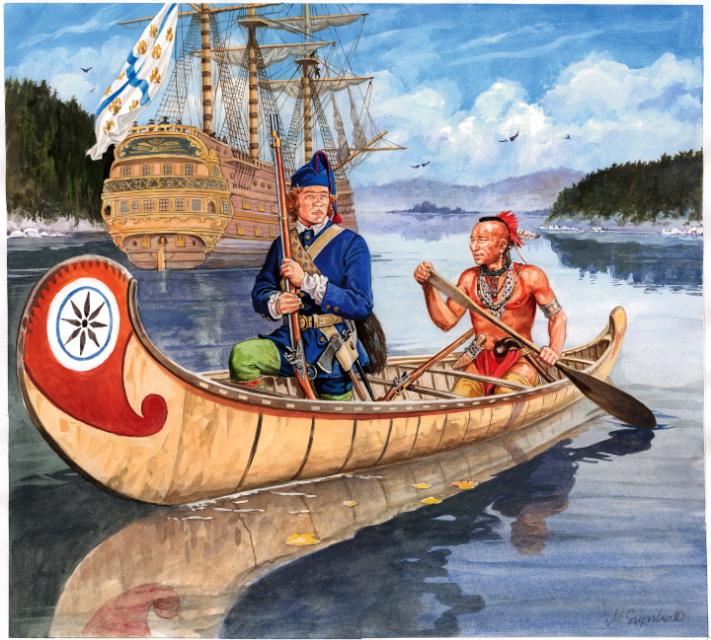
Brytyjczycy atakują Fort Fontenac nad jeziorem Ontario w 1758 r.


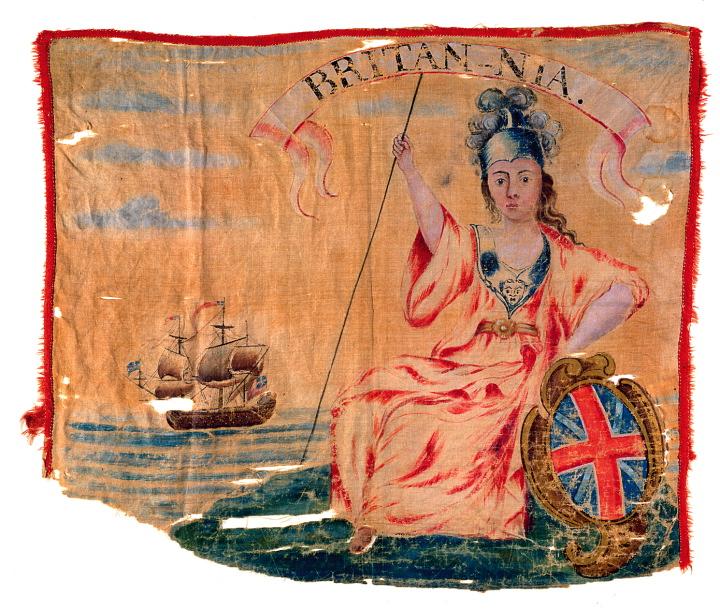
Brytyjska flaga, która zawisła nad zdobytym Louisbourgiem w 1745 r.


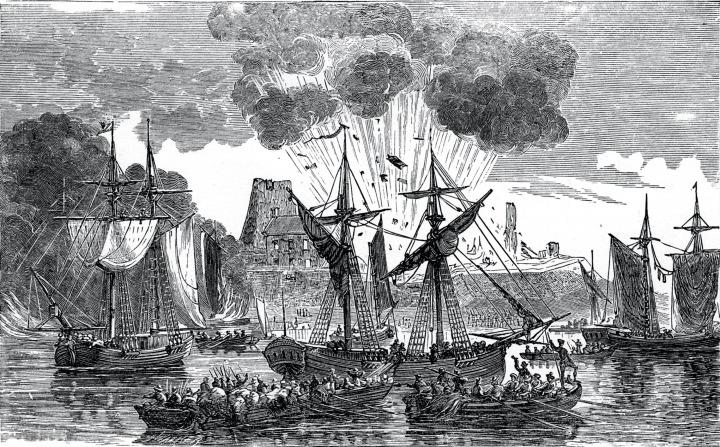
Brytyjczycy oblegają francuską twierdzę Louisbourg, rycina, XVIII w.


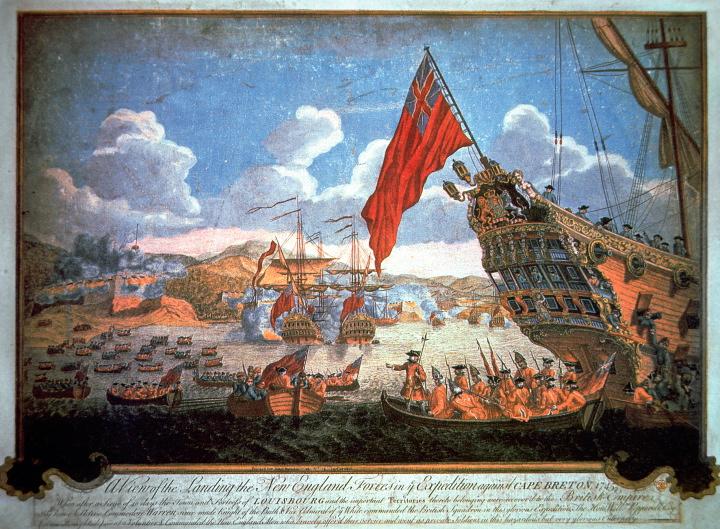
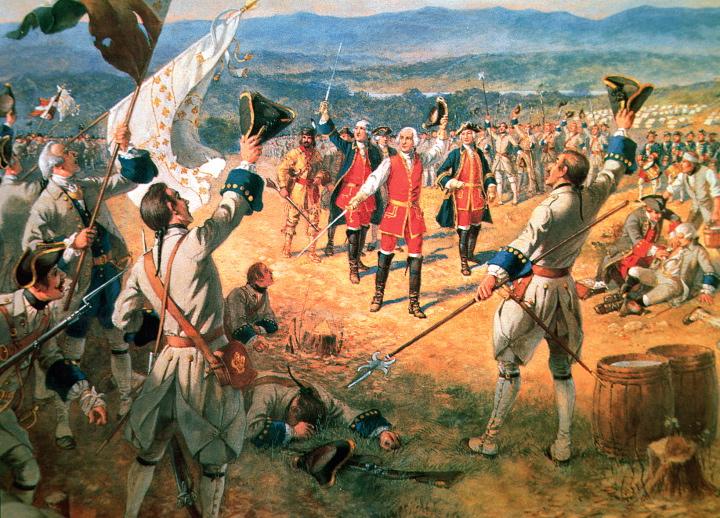
Brytyjczycy świętują zwycięstwo pod Carillon w 1758 r., mal. Henry Alexander Ogden, XX w.


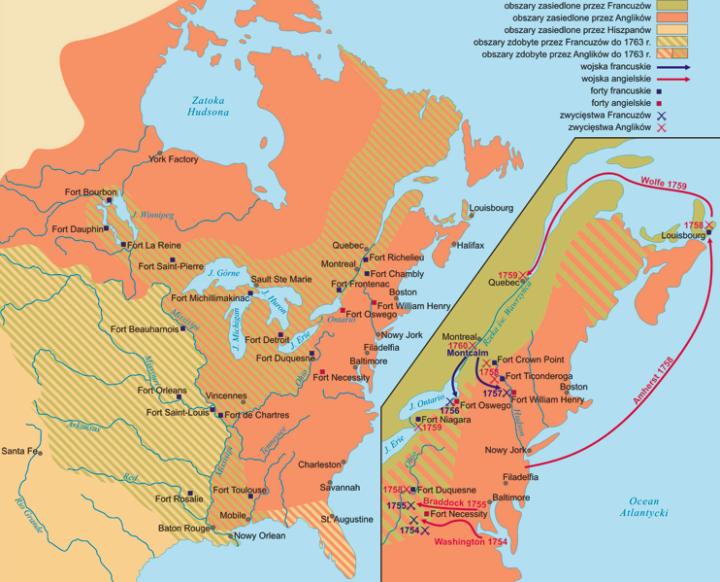
The major engagement in the Canadian theater took place on Cape Breton Island, home of the French fort at Louisbourg. This structure was the strongest fortress in North America, for either side, with defenses stretching for a mile and a half on its landward perimeter. Some of the masonry was in a poor condition owing to the weather conditions of the area, which would prove beneficial to the British artillery. Defensive lines had been dug along the beaches to the south and west of the fortress, and four bastions stood within the fort itself. The governor of Cape Breton Island, Chevalier de Drucour, was in overall command of the French forces at Louisbourg. There were four battalions of regulars, 24 companies of marines, and some militia. Contemporary accounts estimate that there were 3,500 men stationed in and around the fortress. There were 219 cannons on the fortress walls and other defensive positions, as well as 19 mortars. The garrison was prepared for a long siege. A French fleet had arrived over the course of the spring to re-supply the fortress. Five ships of the line and seven frigates patrolled the harbor. 

The British forces were gathered at Halifax, Nova Scotia. The Royal Navy had provided 23 ships of the line, 18 frigates and a fleet of transports, under the command of Admiral Edward Boscawen. Major General Jeffrey Amherst, was to lead the land effort. Once again, as in 1757, the expedition was made up mostly of regulars. There were 14 regular battalions earmarked for the operation, comprising just over 12,000 men with an additional 500 ‘Gorham’s Rangers’ from Halifax and Royal Artillery attached. The fleet sailed on 28 May, and arrived off the Cape Breton coast on 2 June.

There were three possible landing sites. The first was Freshwater Cove, 6 km (four miles) from the fort. Flat Point and White Point were to the east of Freshwater, closer to the fort. Royal Navy and senior army officers sailed up and down the potential landing areas to assess the best approach, then devised their plans. The army was to be divided into three divisions: Brigadier James Wolfe was to lead the main assault against Freshwater Cove, with Brigadiers Charles Lawrence and Edward Whitmore advancing towards Flat and White Points. 

The fleet and army were delayed from landing for more than six days, as fog and surf denied access to the beaches. The French defenses were strongest at Freshwater Cove, where their entrenchment was ready to receive the enemy. Over 1,000 French soldiers had been deployed to throw the British back into the sea and were, as a British officer noted: 
      most advantageously posted behind good entrenchment, the banks very high and almost perpendicular … [W]herever there was the least probability of getting ashore it was well secured with cannon and entrenchment.


Finally, on 8 June, the troops received the order to land. A British observer described ‘nothing seen or heard for one hour but the thundering of Cannon and flashes of lightening’. Wolfe’s division was to see most of the heavy fighting for the day. The surf continued to be a problem – ‘the surge was extremely violent … [Boats] crushed to pieces being carried away by the surf’.

The first waves of British troops approached the beaches. An officer who landed with Wolfe’s division noted: 
      the boats proceeded to the cove, the enemy let them come within half musket shot and gave them a warm reception from their entrenchment, with great guns and small arms.


As Wolfe’s division made a foothold at Freshwater Cove, Lawrence’s division also landed after making a diversion. The French were overwhelmed by the numbers of British troops landing, and began to fear that they were in danger of being cut off from the fort. A British officer recorded the attack: 
      the enemy’s attention being quite engaged at the other cove did not perceive our men climbing rocks till a few of them got to the top who bravely maintained their guard well supported though opposed by numbers they gained the enemy’s flank who feared being cut off from the garrison fled in great disorder.


Each side lost about 100 men during the fight for the beaches.

Flat Point Cove became the landing place for the British artillery and stores, once the area had been secured by the troops moving from Freshwater, and a camp was built to receive troops and materiel coming ashore. General Amherst decided that the best way to deal with the fort was to surround it with batteries and slowly pummel it into submission. A formal European-style siege was planned; unlike Abercromby, Amherst decided against a frontal infantry attack.

On 12 June, Brigadier Wolfe and 2,000 men set out to seize Lighthouse battery, to the north of the fort. The British had received reports that the French had destroyed Lighthouse and Great Battery, two of the major batteries outside Louisbourg’s walls. A French officer stated the reason for abandoning the batteries: ‘the impossibility of maintaining this post obliged us to abandon it; for it was more than we could do to guard the batteries and ramparts of the city’. Wolfe’s forces reached the abandoned lighthouse battery on 20 June. They took possession and immediately opened fire on French shipping in the harbor and other French positions close by. The Island battery, opposite Louisbourg, was silenced on 25 June when the combined artillery fire from the Lighthouse and Royal Navy ships finally destroyed the will of the defenders. On 29 June, the French sank six ships in the entrance to the harbor to deny access to the Royal Navy. Louisbourg was now completely surrounded and closed off to the outside world. The formal siege had begun. The British deployed infantry to various redoubts, set up siege batteries, and began to dig siege trenches towards the fortress.

The outcome of the siege was decided by the ability of the engineers and artillery men on both sides. The French did not sit idly in the fortress under the onslaught of British artillery. One French officer described a typical series of actions: 
      1st of July a detachment of our people sallied out of the wood … [T]here was a very brisk skirmish, but at length our men were forced to retire … we made a sally on the 8th … [W]e surprised them … but what could 900 men do against the vanguard of the enemy who immediately flew to assistance of the sappers.


The siege was dangerous as well for the British soldiers out in the redoubts and trenches. A British officer described what befell an overly curious fellow officer: ’[a] cannon ball which cut his head off as he looked over the breastwork out of curiosity not duty’. 

By late July, the French defenders were beginning to suffer the effects of the siege in earnest. The British siege lines were continuing to close in, and a French 63-gun ship of the line had been destroyed in the harbor. A French officer described the conditions of the French batteries: 
      as our batteries and ramparts had been very much damaged these three days, and as the fire of the enemy’s small arms made it almost impracticable for us to maintain ourselves on those ramparts which we were endeavouring to repair … a breach had been [made] in the Dauphin Bastion and West Gate.


He continued ’in so melancholy a situation, there was nothing left but to capitulate; so that we suspended our fire, and sent to demand a truce, in order to regulate the articles of surrender’. The French garrison surrendered on 26 July.

The British had lost 500 killed and 1,000 wounded during the landings and the siege. The French losses are estimated at 1,000 killed and 2,000 wounded. More than 5,000 soldiers, sailors, and civilians surrendered to the British forces. The siege had taken most of the 1758 campaign season, however, and the advance towards Quebec City would have to wait until the following year. A large garrison was left at Louisbourg to rebuild the works and defend the area against potential French counter attacks. The remainder of the troops were transported to Halifax and New York for winter quarters. 

The campaigns of 1758 had definitively shifted the momentum of the war in Great Britain’s favor. New France was now completely on the defensive. While Abercromby had been stopped at Fort Carillon, it was only a matter of time before the British attacked it again with a different operational plan.


An extract from Campaign 79: Louisbourg 1758 – Wolfe’s First Siege

The final week

21 July At 2 pm the British gunners firing at the French ships had a great stroke of luck. One of their mortar shells squarely hit the poop deck of L’Entreprenant, setting fire to the ship. It was impossible to put out, and the flames spread to Le Célèbre and Le Capricieux. L’Entreprenant blew up and the two other ships were almost totally consumed by 7 pm. 

It was a heavy loss for the French, and Wolfe’s batteries could now fire almost unhindered by the warships. Bombardment of the Dauphin Bastion was accordingly very heavy, and embrasures were badly damaged. Drucour noted that its cavalier was so weakened that it could crumble at any time. 

22 July Two new British batteries south of town consisting of 13 24-pdr. cannons and seven mortar went into action and fired “with great success” on the Queen’s Bastion according to Amherst, who also noted that the French gunners “likewise fired very well on them and threw their shells extremely well.” There followed a curious incident as a French “shot went just into the muzzle of a [British] 24-pdr. and stuck there as if it had been forged to be rammed in.” A British battery of four 24-pdr. guns was started on the left side of the King’s Bastion. All these British bombardments finally set on fire the large building housing the barracks, the chapel and the governor’s quarters which the British called the citadel. There were also fires in the town, so part of the garrison was occupied with fire-fighting. Many French guns in batteries all over the town were knocked out of action. 

23 July On the British left, a second parallel was started, which crept ever closer to the Dauphin Bastion, while a small redoubt was begun on the right. Again, the British gunnery was very effective, starting many fires in the town. Col. Bastide, the chief engineer who had been wounded on the 8th, was now well enough to mount a horse and resume his duties. Some 400 sailors finished the battery to the left of the King’s Bastion. At 10 pm, the wooden barracks originally built by the British and New Englanders in 1745–46 went up in flames “which we had not have better done” reflected Amherst, no doubt already wondering how he would lodge his troops once the town surrendered. 

24 July After inspecting the Dauphin Bastion at dawn, Drucour concluded that it would “soon be out of use,” and that the French batteries were generally “in a sad state.” The British continued to pour a heavy fire into the town and “silenced the guns” in the Queen’s Bastion. The British battery on the right side of the King’s Bastion was completed and opened fire in the afternoon. Admiral Boscawen sent ashore another 400 sailors to carry ammunition and supplies. Another battery containing five guns was started next to the four-gun battery at the left of the King’s Bastion. The admiral also sent ashore another 200 miners who, joined to the 100 already with the army, made a corps of 300; half of them worked on the trenches. The French maintained a heavy fire against them, but the British were now so close that they could fire muskets “into the Embrazures [and] beat them off their guns” (Amherst).

25 July The British batteries again “played with great success” on their various targets. The fortifications were crumbling faster than they could be repaired. Col. Franquet reported a breach in the Dauphin Bastion. William Amherst, who was in the British trenches, reported that a trench had advanced to within 50 meters of the glacis of the Dauphin Bastion. Scaling ladders were sent to the trenches in preparation for an assault.

By now, the town offered a pitiful sight. Many of its buildings were burned and others partly demolished by the intense bombardments of the last few weeks. There was hardly a structure which did not have pieces of shells or cannonballs embedded in its walls. The town’s population was shell-shocked, having been traumatized by the intense bombardments and huddled in casemates every day and night for weeks on end. 

26 July Admiral Boscawen advised Amherst that he had selected captains John Laforey and George Balfour to lead 600 sailors and marines into the harbor in longboats during the night to attack the two remaining French warships. Amherst went to the trenches and, after midnight, “began to despair of the boats coming.” They finally arrived at about 1.30 am under the cover of a fog. The 74-gun Prudent was attacked first by British sailors “armed with cutlass, pistol & hatchet” (William Amherst). According to Drucour, one of its officers had ordered the head gunner to set it on fire should the ship be in danger of being taken, but he was not sure if it was him or the British sailors that had set the ship alight when it ran aground. Le Prudent was certainly doomed to go up in flames and it soon did. British sailors and marines also boarded and captured the 64-gun Bienfaisant and quickly towed it to the other end of the harbor. Boscawen was elated and now planned to force the harbor’s entrance with six of his warships.

By the time the sun rose, the day had already been disastrous for the garrison of Louisbourg. The capture of the ships was the coup de grâce for the defenders’ morale. The bombardments had caused a breach in the Dauphin Bastion and another would soon be apparent in the King’s Bastion. Of the 52 cannons opposed to the British batteries, 40 had been knocked out of action. Drucour bowed to the inevitable and sent a message to Amherst proposing terms for a capitulation.


Further reading

Essential Histories 44: The French-Indian War 1754–1760details the six years of fighting between the French and the British in the forests and plains, lakes and coastal waters of the North American frontier.

Essential Histories 6: The Seven Years’ Warsets the French-Indian War in its global context.

Campaign 79: Louisbourg 1758 – Wolfe’s First Siegeoffers a full account of the Louisbourg campaign.

Campaign 76: Ticonderoga 1758 – Montcalm’s victory against all odds is an account of the bloody reverse the British suffered at Fort Carillon in the same month as their capture of Louisbourg.

Campaign 121: Quebec 1759 – The battle that won Canada tells how Major-General James Wolfe’s men tumbled the Marquis de Montcalm’s French army into bloody ruin.

Men-at-Arms 48: Wolfe’s Army focuses on the British forces throughout their disastrous and triumphant wilderness campaigns which ultimately ensured the birth of the English-speaking United States of America

Men-at-Arms 313: Louis XV’s Army (5) Colonial and Naval Troops details the uniforms, arms and accoutrements of Louis XV’s colonial and naval troops.

Warrior 19: British Redcoat 1740–93 is a portrait of the effective fighting man who was the backbone of Britain’s military success throughout this period. 

Fortress 27: French Fortresses in North America 1535–1763 provides a detailed examination of the three large fortified cities in Canada during the 18th century including the important naval station of Louisbourg.

Essential Histories Specials 7: Liberty or Death – Wars that forged a nationplaces the siege of Louisbourg in the wider context of America’s struggle for peace and independence.

Thursday, 19 July 2018

British politics, 1917-1918

British politics, 1917-1918
This week's chapter examines Mr Lloyd George's government, the War Cabinet, electoral reform, the Irish Convention, the Dardanelles and Mesopotamia commissions, the India cotton duties, Indian constitutional reforms, the Corn Production Act, the Stockholm conference, the Lansdowne letter, war aims, unity of command, the "sniping" debates, the last Military Service Act, the Irish conscription clause, the Maurice letter and debate, the Education Act, the biggest Budget, the general election, the reconstructed government
It took a long time for British politicians to recognize that strategic unity was a fundamental condition of victory, and the controversy which raged around the question in the latter part of 1917 and the first months of 1918 gave rise to a remarkable series of discussions in the House of Commons which came to be known as "sniping" debates


Lords vote for woman suffrage
january 11, 1918
Lord Curzon wound up the debate with a tremendous onslaught on the principle of woman suffrage. He described the proposed change as vast, incalculable, and catastrophic, without precedent in history and without justification in experience
https://www.thetimes.co.uk/article/lords-vote-for-woman-suffrage-dfh8qrbpz?utm_source=newsletter&utm_campaign=newsletter_118&utm_medium=email&utm_content=118_18.07.2018%20Politics%20(1)&CMP=TNLEmail_118918_3777337_118

From The Times, January 10, 1918

The House of Lords tonight rejected Lord Loreburn’s amendment to the Reform Bill opening the Parliamentary franchise to women by 134 votes to 71 — a majority of 63. The debate attracted the largest House since the beginning of the war. There were more women than men in the seats allotted to the public, and there has not been such a large attendance of peeresses in the side galleries since the far-off days of party conflict.
The Lord Chancellor, in resuming the debate, said what made him anxious was the possible effect of enfranchising 6,000,000 women for a General Election during the war. There would be a mass of women without political experience upon which pacifists might work.
Lord Selborne followed. The cost of carrying the amendment would involve the rejection of the Bill and, in the climax of the war, would split the nation from top to bottom. In the whole of his political experience no measure had been stamped with such unanimous national approval. He regretted the suggestion of the Lord Chancellor that women would be likely to be a prey to pacifists.
The Archbishop of Canterbury strongly supported the women’s claim. He did not base his case on rewarding women for having done well in the war. It was rather a recognition of the part that women were now taking in our national life. Lord Lytton asked bluntly whether women were to be told again that they must remain in the same category as lunatics and children.
Lord Curzon wound up the debate with a tremendous onslaught on the principle of woman suffrage. He described the proposed change as vast, incalculable, and catastrophic, without precedent in history and without justification in experience. He even ventured on a prediction that before many years were past the influence of women voters would not be Conservative but Socialistic, to the disturbance of home life. He could not conceal that to cut the clause out of the Bill would be a challenge to the House of Commons, and that the House of Lords was not likely to prevail. In these circumstances he proposed to abstain. The division was then taken, and the announcement of the figures was received with a round of cheering — an unusual manifestation in the House of Lords.