Thursday, 2 February 2017
The latest sea outrage
The sinking of hospital ships by German submarines is no new outrage. There have been flagrant attacks on Russian Red Cross vessels in the Black Sea. Our own hospital ships, and those of the French, have owed their comparative immunity in home waters more to the measures of precaution taken than to any forbearance of the enemy. The fate of the Britannic and of the Braemar Castle — both sunk in the Aegean during November — proves that well enough. But the Foreign Office are probably right in saying that the new German manifesto means that the German Government intend to attempt “to add other and more unspeakable crimes ... to the long list which disgraces their record”.
The most recent of these crimes is among the worst. On Saturday, in a heavy easterly gale, the Artist, a British steamer, was torpedoed 48 miles from land. Of the crew, who were forced into open boats “utterly without means of reaching land or succour”, sixteen survived. The Admiralty do not mince words about the fate of the rest. “Those who perished during those three days of bitter exposure were murdered, and to pretend that anything was done to ensure their safety would be sheer hypocrisy.”
THE IMPERIAL WAR CABINET AND CONFERENCE, 1917.
Left to right (seated): Mr. A. Henderson, Lord Milner, Lord Curzon, Mr Bonar Law, Mr. Lloyd George, Sir Robert Borden, Mr. Massey, and General J. C. Smuts.
Standing (in middle): Sir Satyendra Sinha, the Maharajah of Bikanir. Sir James Meston, Mr. Austen Chamberlain, Lord Robert Cecil, Mr. WaIter Long, Sir Joseph Ward, Sir George Perley, Mr. Rogers and Mr. Hazen.
Standing (back· row): Captain Amery, Admiral Jellicoe, Sir Edward Carson, Lord Derby, General Morris,
Sir M. Hankey, Mr. Lambert, and Major Storr.
GENERAL SMUTS AND THE MAHARAJAH OF BIKANIR RECEIVE THE FREEDOM
OF THE CITY OF LONDON.
Inspecting the Guard of Honour in Guildhall Yard.
SIR ROBERT BORDEN, GENERAL SMUTS, AND THE MAHARAJAH OF BIKANIR RECEIVE THE FREEDOM OF THE CITY OF EDINBURGH, APRIL 11, 1917.
The new freemen leaving the Usher Hall with the 'Lord Provost after the ceremony.
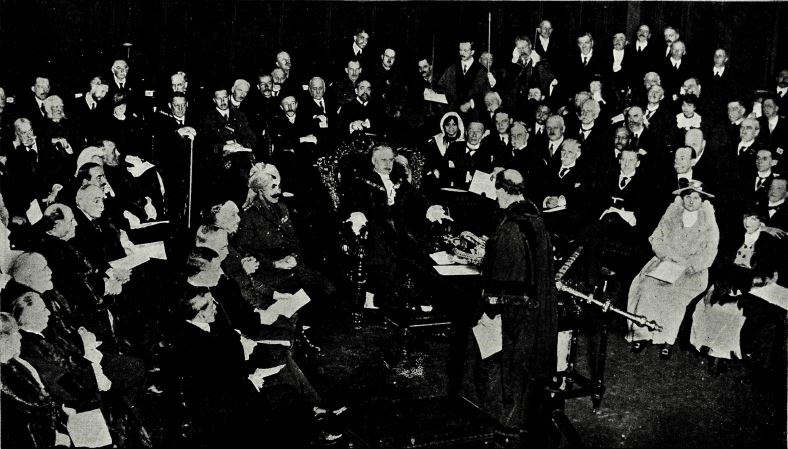
PRESENTATION' OF THE FREEDOM' OF THE CITY OF L0ND0N TO, MINISTERS'OF THE EMPIRE
Seated, on the Lord Mayor's right hand are (reading from left to right) :-Sir Satyendra Prasanna Sinha, Sir James Meston"
Sir Edward Morris (Prime Minister, Newfotlndland), General Smuts, and the Maharajah of Bikanir.
http://www.thetimes.co.uk/article/what-the-war-conference-means-wgznfbx7b
What the War Conference Means
The Dominions have long believed that the time had come for them to take a more direct share in the government of the Empire
January 26, 1917
The statement by the Prime Minister about the War Conference which we publish today was made to an Australian Press representative. But it is addressed to all the Dominions, expounding for their benefit the necessarily vague terms of the invitation to their Prime Ministers. It sets at rest all doubts about the nature of the War Conference, and puts it in the true light as a bold innovation in the war government of the Empire.
The representatives of the Dominions and of India, while they are here, are to “sit in the Executive Cabinet of the Empire.” At its meetings they will have an equal status with British Ministers who are members of the War Cabinet. This, as Mr Lloyd George readily admits, breaks away from all precedent. Only lately have Dominion Ministers even been admitted to meetings of the Imperial Cabinet. When they were admitted they were there to receive information and to give advice. They were not members of the Cabinet itself. Now they are to be full members.
Thus, by a stroke of the pen, the Government has created, if only for a moment of emergency, that Cabinet of the Empire, composed of representatives from all its self-governing States, which has seemed for so long to be a dream of the Imperial visionary. The creation of an Imperial Cabinet, even though its existence is limited to a series of special meetings and though its functions are adjusted to the imperative needs of the war, is, as the Prime Minister says, a proof that the British peoples “have found a unity in the war such as never existed before - a unity not only in history but of purpose.”
The Dominions have long believed that the time had come for them to take a more direct share in the government of the Empire. Since the war they have felt more keenly than ever their divorce from direct responsibility. Now they are asked to assume it. There is no doubt about their reply, once they understand that the invitation is genuine, that it has real business behind it, and is not mere window-dressing.
The Prime Minister’s explanation of the real meaning of the invitation will show them that there is a new spirit abroad in this country. That is all they want to know. The rest can well be left to them. Nonetheless, it is an excellent thing that the work which the War Conference is to do is now set before them in unmistakable terms. The Conference is first and last a war measure. The Prime Minister puts its complete justification into a sentence. “You don’t suppose,” he says, “that the Overseas nations can raise and place in the field armies containing an enormous proportion of their best manhood and not want to have a say, a real say, in determining the use to which they are to be put.”
“Nothing,” in short, “affecting the Dominions, the conduct of the war, or the negotiations of peace will be excluded from its purview.” Once the broad lines of Imperial policy on all these questions are laid down they can be adapted in detail to the shifting exigencies of the moment. Until they have been discussed and determined, at least in outline, by a Cabinet of the Empire, the British peoples can neither develop their full strength for war nor speak with clear unanimity in the councils of the Alliance.
The representatives of the Dominions and of India, while they are here, are to “sit in the Executive Cabinet of the Empire.” At its meetings they will have an equal status with British Ministers who are members of the War Cabinet. This, as Mr Lloyd George readily admits, breaks away from all precedent. Only lately have Dominion Ministers even been admitted to meetings of the Imperial Cabinet. When they were admitted they were there to receive information and to give advice. They were not members of the Cabinet itself. Now they are to be full members.
Thus, by a stroke of the pen, the Government has created, if only for a moment of emergency, that Cabinet of the Empire, composed of representatives from all its self-governing States, which has seemed for so long to be a dream of the Imperial visionary. The creation of an Imperial Cabinet, even though its existence is limited to a series of special meetings and though its functions are adjusted to the imperative needs of the war, is, as the Prime Minister says, a proof that the British peoples “have found a unity in the war such as never existed before - a unity not only in history but of purpose.”
The Dominions have long believed that the time had come for them to take a more direct share in the government of the Empire. Since the war they have felt more keenly than ever their divorce from direct responsibility. Now they are asked to assume it. There is no doubt about their reply, once they understand that the invitation is genuine, that it has real business behind it, and is not mere window-dressing.
The Prime Minister’s explanation of the real meaning of the invitation will show them that there is a new spirit abroad in this country. That is all they want to know. The rest can well be left to them. Nonetheless, it is an excellent thing that the work which the War Conference is to do is now set before them in unmistakable terms. The Conference is first and last a war measure. The Prime Minister puts its complete justification into a sentence. “You don’t suppose,” he says, “that the Overseas nations can raise and place in the field armies containing an enormous proportion of their best manhood and not want to have a say, a real say, in determining the use to which they are to be put.”
Thus the tradition that made the British Government responsible for the foreign policy and for the naval and military strength of the whole Empire is to be overborne by the creation of a War Cabinet for the whole Empire. The work of that Cabinet will be dictated by the circumstances of its origin. It is to be a Cabinet for war, and all the conditions, contingencies, and consequences of the war will be within its province. It will review and determine British strategy by sea and land. Its value in this field must, of course, depend entirely; upon the circumstances of its meeting.
War waits for no man, and as its blind tide ebbs or flows the enigmas of one week become the commonplaces of the next. But, this apart, the Conference will have much to do. The Prime Minister gives a rough outline of its work. It will consider “all the difficult problems connected with peace”. as well as “what I may call the preparation for peace” - demobilization, “migration of our own peoples to other parts of the Empire, the settlement of soldiers on the land, commerce and industry after the war.”“Nothing,” in short, “affecting the Dominions, the conduct of the war, or the negotiations of peace will be excluded from its purview.” Once the broad lines of Imperial policy on all these questions are laid down they can be adapted in detail to the shifting exigencies of the moment. Until they have been discussed and determined, at least in outline, by a Cabinet of the Empire, the British peoples can neither develop their full strength for war nor speak with clear unanimity in the councils of the Alliance.
Labels:
Британія,
Британська імперія,
ВІ,
війна,
газети,
газети ПСВ,
Індія,
історія,
Канада,
ПСВ
Tuesday, 31 January 2017
100 Years Ago - the Great War and Votes for Women
http://www.thetimes.co.uk/past-six-days/2017-01-28/register/famine-with-plenty-in-russia-kmphx76xk
january 28, 1917
Famine with plenty in Russia
Russia is experiencing famine in the midst of plenty. The scarcity of food is the one thing talked of throughout the land. Last summer the poorer people took up their positions outside the Petrograd municipal meat shops at 10 o’clock in the evening. The sun had hardly set over the Elagin Island, where fashion and wealth enjoyed their ease and the wonders of the white nights, before the poor, basket in hand, began their weary vigil. Some waited 10 and 12 hours for a morsel of meat. Since then we have seen queues become the rule — for meat, for bread, for milk, for vegetables, for sugar, people wait in long “tails”. Rich and poor participate, the latter in person, the former by proxy through their servants. With the thermometer sometimes at 20 below zero Fahrenheit, people have to wait hours outside each shop to get daily necessities. The writer of this article saw a “tail” of more than 1,200 people outside the cooperative shop for railway employees at Kosloff waiting for white flour. Kosloff had then been without flour for 10 days, though half a dozen of the largest flour-mills in Russia are within a 250-mile radius of the town.
Probably there is sufficient food in the country to feed the population for the next two years. The problem to solve is how to distribute it. The Department of Provisions has borne the burden of supplying the Armies in the field since July, 1915. As time went on the deficiency in provisioning the civil population increased. The Ministry of Trade and Industry considered the question and appointed committees, but there the matter rested. Now its efforts have completely ceased.
Throughout the war the railways have supplied the Army with all that is needed or was available. This shows some organization; but it was done at the expense of starving traffic to the capitals and large provincial towns. With thorough, or even partially, efficient organization the great towns and manufacturing centres could have been supplied with all necessities in sufficient quantities if ordinary care had been taken in the use of goods trucks. Organization and co-ordination are, however, essential if Russia is to cope with her food problem; and it is for this reason that the absence of a strong, capable, and united Ministry has been felt during the past year.
Labels:
Австралія,
Британія,
ВІ,
війна,
газети,
газети ПСВ,
демократія,
жінки,
Нова Зеландія,
ПСВ,
Росія
Thursday, 26 January 2017
100 років тому
http://www.thetimes.co.uk/edition/register/venice-in-wartime-75xm2jdjh
january 26, 1917
Venice in wartime
Venice has been attacked from the air 21 times since the outbreak of the war. In 1915 there were eight bombardments, last year 13. These were made either by daylight or when the moon defined the position of the city on its lagoon and canals. It seems that some attempt has been made to aim at specific points — the arsenal, the station, the cotton mill — except during the violent assault which followed the fall of Gorizia, when bombs were sprinkled freely all over the town; but, in any case, the height at which the aeroplanes fly makes the incidence of the bombs a matter largely of chance. As to actual damage, it is surprising that there has been so little. Many of the bombs fell in the water and were comparatively harmless, but neither the Venetians nor their enemies can tell what precious monument may not be sacrificed in some future raid. The raid of October 20, 1915, demolished the roof of the Scalzi Church, near the railway station, with the ceiling by Tiepolo representing the Translation of the Holy House. Though the fresco was not one of Tiepolo’s finest works, it can never be replaced. On August 9 of last year incendiary bombs were used, and the roof of S Maria Formosa, the Shrine of Palma’s Sta Barbara, was completely burned, except for a fragment over the north transept. The August attacks wrought the greatest havoc, but on September 4 an incendiary bomb fell in the Piazza, only a few yards from the facade of S Marco. This naturally roused great alarm for the safety of the Ducal Palace and the Basilica. The bronze horses from the facade of S Marco are stabled in the Atrium, and covered with sandbags. The facade has disappeared behind a huge screen of timber. Inside, the church, on sunless days, is almost pitch-dark. The windows of the cupolas have been removed and, during a raid, are all left open. To prevent rain from entering, they have been filled with screens of rough, brownish cloth. The effect on the interior is most surprising. When the sun is shining the light coming through is of a soft, diffused yellow. This exactly hits the key of the mosaics, which are illumined by it, till each cupola shimmers and gleams like an inverted saucer of molten gold. It is a revelation of the mosaics of San Marco; they have never been seen like this before.
Labels:
Британія,
ВІ,
війна,
газети,
газети ПСВ,
катастрофи,
медицина,
ПСВ
100 років тому - доля полонених
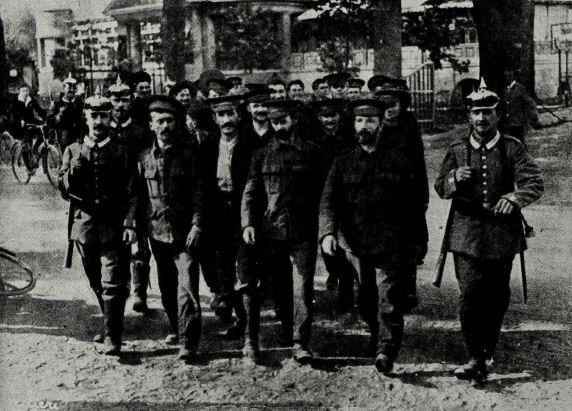
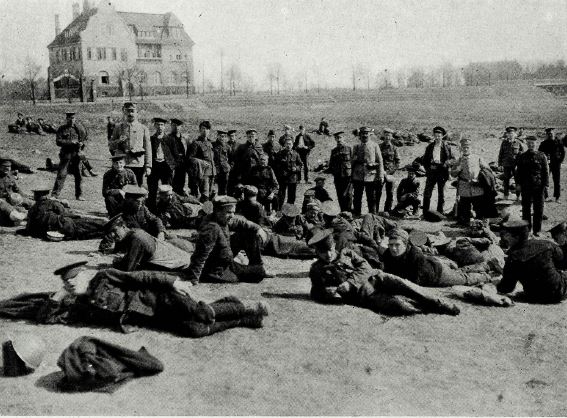
WITTENBERG CAMP
PARCELS FROM HOME
A SPORTS GROUND, BUT NO SPORT.
http://www.thetimes.co.uk/article/british-and-german-prisoners-6mgxsrm23
British and German Prisoners
The British prisoners appear to be singled out from those of other nationalities for harsh and humiliating treatment
April 12, 1915
The treatment accorded to prisoners of war, and particularly to wounded prisoners of war, is justly regarded as a test of the civilization which exists amongst their captors. The savage regards his captives as objects upon which it is his right and his pleasure to exercise his cruelty and his hate. The nations of Christendom, whose customs in warfare are still largely based upon the traditions of chivalry, look upon their prisoners as honourable foes, against whom they cherish no personal ill-will, and to whom honour and self-respect oblige them to extend all the consideration and the courtesy compatible with safe keeping.
The gradual amelioration in the lot of the captured, like the growth of other humane practices in the conduct of war, has been hitherto considered by all peoples who have emerged from barbarism as amongst the chief tokens of the progress of the world. The regulations annexed to The Hague Convention of October 18, 1907, were welcomed by them, as giving a solemn international sanction to principles and practices which the most cultivated nations have long followed during hostilities as a matter of course. It was with wonder and, indeed, with a large measure of incredulity, that the English peoples received the first reports which reached them that the Germans had flung these traditions to the winds, that they were treating British prisoners, and even wounded prisoners, with cruelty and insult, and that they were showing the same contempt for The Hague regulations as for other “scraps of paper”.
We may hope, even still, that some of the stories which have been received are exaggerated, and that the worst conduct described in them has not been general. It seems, however, impossible, in the face of the evidence contained in the recent White Paper, and strongly corroborated from other sources, to doubt that Germany, with all her Kultur, has relapsed into brutalities towards her English captives, without parallel in the modern history of war.
Sir Edward Grey’s dispatch of December 26 and the papers annexed to it, especially Major Vandeleur’s reports, appear to be conclusive in this respect. Major Vandeleur is himself an escaped prisoner, who speaks of what he himself saw and heard. Sir Edward Grey expresses his conviction that the American Ambassador, to whom he forwarded the paper, could not fail to be impressed by its “evident veracity and sincerity”. All who read it, we imagine, will share this impression. The most painful part of the report is that which relates to the journey of the prisoners from the front into Germany. They were constantly abused and reviled. One German officer showed his manliness and breeding by spitting upon a defenceless British officer. Officers and men were herded together into foul horse-boxes. All along the line German officers as well as soldiers cursed them. Their greatcoats were stolen in the bitter cold, and their guards opposed the charitable efforts of the French Red Cross to supply them with food. At one Station Major Vandeleur was dragged out of the wagon, cursed in filthy language by another of these German “gentlemen” wearing the Kaiser’s coat, and then kicked at this brute’s orders by a common soldier. Such are the humanity and the politeness, of which the German military caste, the men who exact from mere civilians amongst their own countrymen cringing respect for their uniform, are capable towards a wounded and defenceless English gentleman.
Only once did Major Vandeleur hear an officer try to restrain the curses of his men. The prisoners were cooped up in these over-crowded and unventilated wagons for three days and three nights. In the Crefeld Camp, where Major Vandeleur was confined, no gross physical hardships are complained of. The officers were overcrowded, and they had, for the most part, to make their own beds and to black their own boots. The treatment of the rank and file imprisoned at other places is described as “barbarous”.
Major Vandeleur’s information in regard to it comes from British orderlies transferred to Crefeld as officers’ servants, and from English and French medical officers. The men were deprived of their greatcoats and their money, and often of their tunics. All the orderlies reached Crefeld crawling with vennin and many were suffering from the itch. They said that they were half-starved, and they looked half-starved. One of the reports by Americans appended to the dispatch declares they are “kept on very short commons”; another that they are pale from want of food and “vermin-ridden”, while the floors of their tents are “a mass of mud”.
Sir Edward Grey draws attention to the fact that the British prisoners appear to be singled out from those of other nationalities for harsh and humiliating treatment. This view is fully borne out by Major Vandeleur. The French prisoners were fed on the terrible journey from the front; the British got the leavings. All the menial and dirty work of the camps is assigned to our countrymen, and Major Vandeleur declares it to be his strong opinion that the particular brutality shown to them on the way there “is deliberately arranged for by superior authority”. The French officers, he states, “were treated quite differently”. This view is supported by the evidence of a Russian doctor and of a French priest.
The report of Mr John B Jackson, of the American Embassy in Berlin, upon the position of German prisoners and interned Germans in this country forms a contrast to these statements, upon which we may look with satisfaction and with pleasure. It shows that we have not been unmindful of what we owe to ourselves and to our opponents. The German officers without exception told Mr Jackson that they “had always been treated like officers and honourable men,” and many of the soldiers informed him that British soldiers had protected them from insult as they passed through France. Nowhere did this neutral observer, who had the fullest opportunities for conversing with the prisoners apart, discover any signs of a desire to make their condition harder or more disagreeable than was necessary. As to “Donington Hall,” it is, he declares, “a beautiful place”. That is the way in which England treats her German prisoners. It is the way in which she would have expected Germany to treat captive Englishmen.
That expectation has been disappointed. Germany has shown no respect for misfortune or for suffering, for rank or for the uniform which, in the past, has everywhere appealed to soldiers’ hearts. She has striven in many cases, and striven, it must be feared, of set purpose to inflict needless pain and undeserved humiliation on our brave countrymen. The degradation is not theirs, but her own.
She has heaped fresh disgrace upon her name, and disgrace which we should have supposed would have been felt with peculiar keenness by a military nation. She has shown that she disregards the common humanities and the honourable courtesies of soldiers to each other, as utterly as she despises the rights of civilians and the obligations of international law.
The gradual amelioration in the lot of the captured, like the growth of other humane practices in the conduct of war, has been hitherto considered by all peoples who have emerged from barbarism as amongst the chief tokens of the progress of the world. The regulations annexed to The Hague Convention of October 18, 1907, were welcomed by them, as giving a solemn international sanction to principles and practices which the most cultivated nations have long followed during hostilities as a matter of course. It was with wonder and, indeed, with a large measure of incredulity, that the English peoples received the first reports which reached them that the Germans had flung these traditions to the winds, that they were treating British prisoners, and even wounded prisoners, with cruelty and insult, and that they were showing the same contempt for The Hague regulations as for other “scraps of paper”.
We may hope, even still, that some of the stories which have been received are exaggerated, and that the worst conduct described in them has not been general. It seems, however, impossible, in the face of the evidence contained in the recent White Paper, and strongly corroborated from other sources, to doubt that Germany, with all her Kultur, has relapsed into brutalities towards her English captives, without parallel in the modern history of war.
Sir Edward Grey’s dispatch of December 26 and the papers annexed to it, especially Major Vandeleur’s reports, appear to be conclusive in this respect. Major Vandeleur is himself an escaped prisoner, who speaks of what he himself saw and heard. Sir Edward Grey expresses his conviction that the American Ambassador, to whom he forwarded the paper, could not fail to be impressed by its “evident veracity and sincerity”. All who read it, we imagine, will share this impression. The most painful part of the report is that which relates to the journey of the prisoners from the front into Germany. They were constantly abused and reviled. One German officer showed his manliness and breeding by spitting upon a defenceless British officer. Officers and men were herded together into foul horse-boxes. All along the line German officers as well as soldiers cursed them. Their greatcoats were stolen in the bitter cold, and their guards opposed the charitable efforts of the French Red Cross to supply them with food. At one Station Major Vandeleur was dragged out of the wagon, cursed in filthy language by another of these German “gentlemen” wearing the Kaiser’s coat, and then kicked at this brute’s orders by a common soldier. Such are the humanity and the politeness, of which the German military caste, the men who exact from mere civilians amongst their own countrymen cringing respect for their uniform, are capable towards a wounded and defenceless English gentleman.
Only once did Major Vandeleur hear an officer try to restrain the curses of his men. The prisoners were cooped up in these over-crowded and unventilated wagons for three days and three nights. In the Crefeld Camp, where Major Vandeleur was confined, no gross physical hardships are complained of. The officers were overcrowded, and they had, for the most part, to make their own beds and to black their own boots. The treatment of the rank and file imprisoned at other places is described as “barbarous”.
Sir Edward Grey draws attention to the fact that the British prisoners appear to be singled out from those of other nationalities for harsh and humiliating treatment. This view is fully borne out by Major Vandeleur. The French prisoners were fed on the terrible journey from the front; the British got the leavings. All the menial and dirty work of the camps is assigned to our countrymen, and Major Vandeleur declares it to be his strong opinion that the particular brutality shown to them on the way there “is deliberately arranged for by superior authority”. The French officers, he states, “were treated quite differently”. This view is supported by the evidence of a Russian doctor and of a French priest.
The report of Mr John B Jackson, of the American Embassy in Berlin, upon the position of German prisoners and interned Germans in this country forms a contrast to these statements, upon which we may look with satisfaction and with pleasure. It shows that we have not been unmindful of what we owe to ourselves and to our opponents. The German officers without exception told Mr Jackson that they “had always been treated like officers and honourable men,” and many of the soldiers informed him that British soldiers had protected them from insult as they passed through France. Nowhere did this neutral observer, who had the fullest opportunities for conversing with the prisoners apart, discover any signs of a desire to make their condition harder or more disagreeable than was necessary. As to “Donington Hall,” it is, he declares, “a beautiful place”. That is the way in which England treats her German prisoners. It is the way in which she would have expected Germany to treat captive Englishmen.
That expectation has been disappointed. Germany has shown no respect for misfortune or for suffering, for rank or for the uniform which, in the past, has everywhere appealed to soldiers’ hearts. She has striven in many cases, and striven, it must be feared, of set purpose to inflict needless pain and undeserved humiliation on our brave countrymen. The degradation is not theirs, but her own.
She has heaped fresh disgrace upon her name, and disgrace which we should have supposed would have been felt with peculiar keenness by a military nation. She has shown that she disregards the common humanities and the honourable courtesies of soldiers to each other, as utterly as she despises the rights of civilians and the obligations of international law.
Thursday, 19 January 2017
Subscribe to:
Posts (Atom)