Thursday, 11 October 2018

100 Years Ago


A triumph of British arms

The British Army yesterday captured Le Cateau and retrod one of the most famous battlefields of the retreat from Mons. The Germans in the centre at Laon, and La Fère are cutting the margins of retreat very fine. The only weakness of the enveloping scheme is on the right of the Allied line. Owing to the enormous natural strength of the old German positions in Champagne and the Argonne, and to the lateness of our reconquest of the Suippe valley, this right wing is not so far forward as would be desirable. The main body of the German Army in France still has room for manoeuvre and delay. It may find another temporary line of resistance along the Serre and the Upper Aisne and, though this cannot be held for long owing to the breakthrough on the west, it may jam the closing of our strategic pincers.
The devastation of Cambrai seems to be less complete than was at first supposed, though the great Place d’Armes has been systematically and wantonly destroyed. But our Special Correspondent tells us this morning of a new and peculiarly mean piece of “frightfulness” in some of the deserted villages, where the Germans have deliberately broken up the embroidery machines, the only means of livelihood of the people of the district. No valour can defeat malice of this kind; it can only be defeated, if at all, by an act of policy, fully conceived and formally notified to the enemy.
General threats of reprisals do not meet the case; to be effective they must be specific. We do not mean that if the Germans burn a French town, we must burn a German town. We do mean that our reprisals should be of such a character as will deter the enemy, or, if not, punish him, and if possible compensate the sufferers for their losses. It may be that German towns could be more appropriately punished in other ways than by destruction. Ransom may take more forms than one. But in one form or another a German town should be held to ransom for the wanton destruction without military necessity of a French or Belgian town. And delay in the formulation of a policy is dangerous with events moving so rapidly: for, if nothing is done, the milestones of victory in the occupied districts of France and Belgium will be marred by heaps of smouldering ashes.

Wednesday, 10 October 2018

Squadron Leader Owen Ellison obituary

https://www.thetimes.co.uk/edition/register/squadron-leader-owen-ellison-obituary-r76x3z9k2
Bomber pilot renowned for his dance moves who successfully mined the Danube and later ran a popular hotel in Barbados
Ellison flew 42 operational sorties during the war against targets across Europe
Owen Ellison was one of the last survivors of one of the RAF’s lesser-known but most successful campaigns of the Second World War: the mining of the River Danube between April and October 1944, which disrupted the supply of oil from Romania to Germany.
Flown at night from bases in central Italy, the RAF raids proved highly effective as sunken ships, barges and tugs paralysed the river. Sixteen British aircraft and their crews were lost.
Ellison, then a flying officer with 70 Squadron, was the pilot of a Vickers Wellington twin-engine bomber who had seen action in north Africa in support of the Eighth Army and would receive the Distinguished Flying Cross for his actions over the Danube.

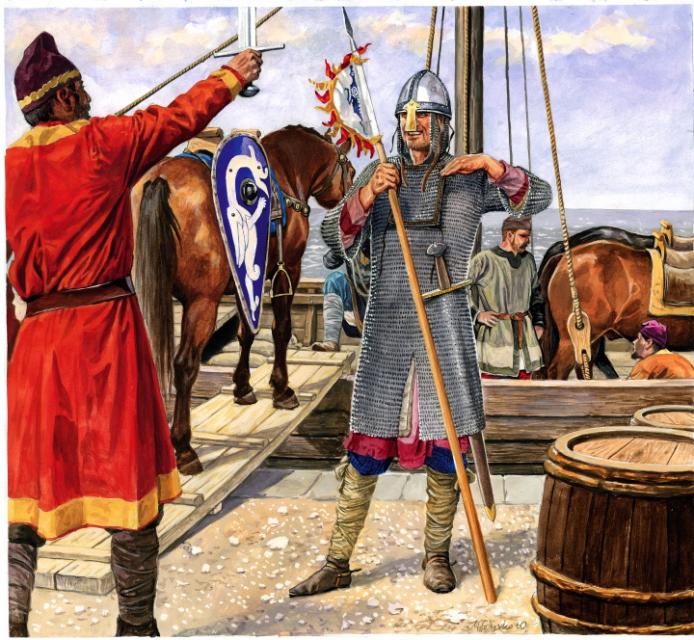
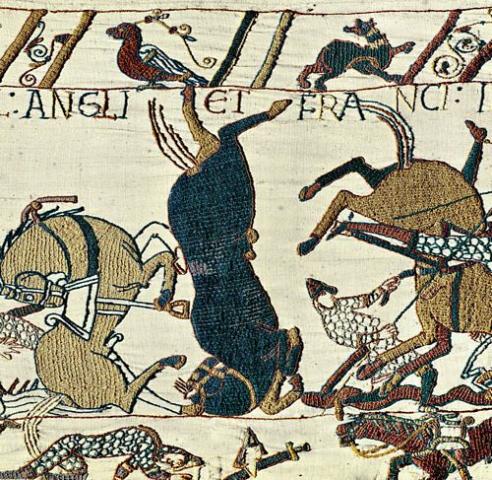
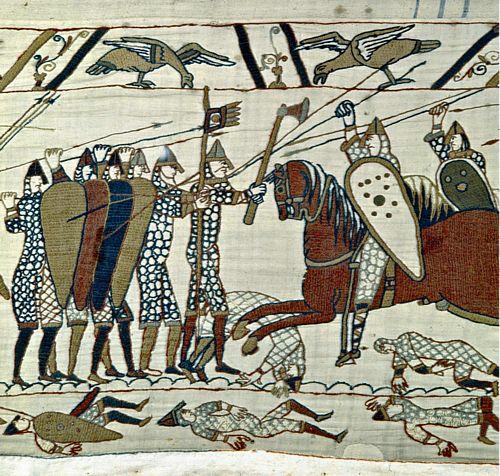
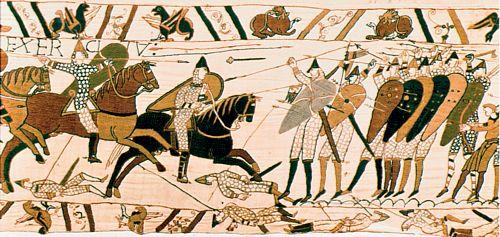
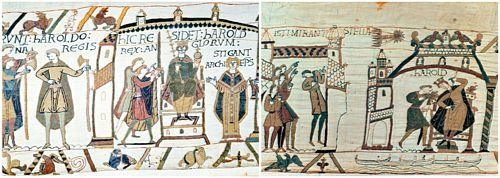
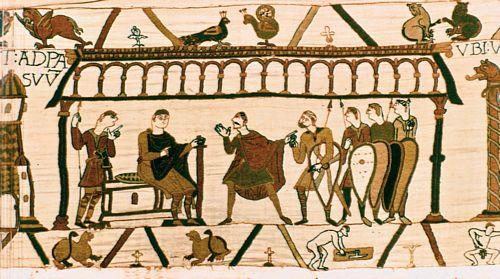
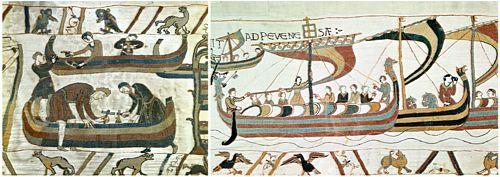
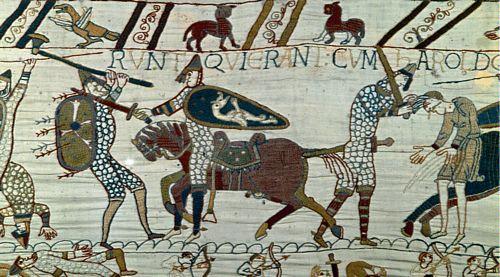
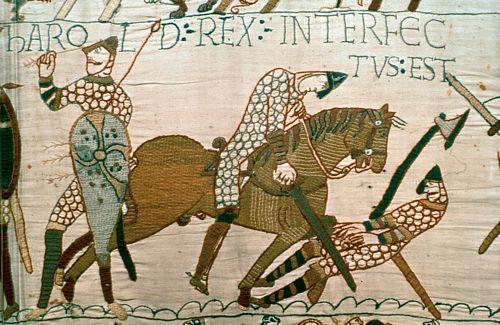
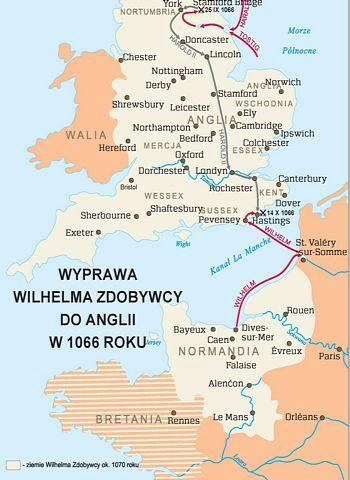
This Week in History - The Battle of Hastings (9-17 Oct 1066)

https://ospreypublishing.com/thisweekhistory/


Click on Essential Norman Conquest for a day-by-day reconstruction of the days between William’s landing at Pevensey on 28 September and his victory at Hastings. This website includes animated maps, 360 degree panoramas of the battlescene, 3D Norman and Saxon soldiers and 11th century soundbites.

Further reading

Essential Histories 12: Campaigns of the Norman Conquest (extract below) places the battle in its full historical context.

Campaign 13: Hastings 1066 (Revised Edition)  describes the campaign and battle in greater detail.

Warrior 1: Norman Knight AD 950–1204 explores the recruitment, training and lifestyle of the invaders.

Men-at-Arms 85: Saxon, Viking and Norman examines the equipment and lifestyle of the defenders.

Elite 9: The Normans expands on the crucial and formative effect that the Normans had on Britain and Europe.

Tuesday, 9 October 2018

Major-General Sir John Swinton obituary

https://www.thetimes.co.uk/edition/register/major-general-sir-john-swinton-obituary-d6vkzjmfc

Distinguished Scots Guardsman who wanted his daughter Tilda to marry a duke but watched her become an Oscar-winning actress
Swinton while commanding the Scots Guards in 1970
The only misadventure John Swinton’s false lower leg encountered during 34 years of active military service after the war was when its owner’s eight-year-old son fired a .22 shot through it by mistake during a shoot. Indeed, Willie Swinton succeeded where Malayan insurgents and Greek-Cypriot terrorists had failed during John Swinton’s distinguished postwar military career.
The guardsman’s lower left leg had been severed by a mortar splinter in the last days of the Second World War, but his return to active service was not long delayed. The outbreak of the insurrection in Malaya in 1948 called for urgent reinforcements of infantry to counter the campaign of murder and extortion launched by the communist terrorists.

Monday, 8 October 2018

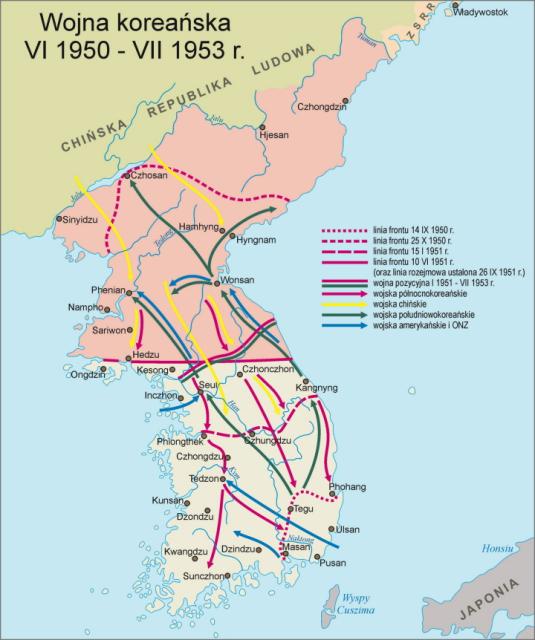
This Week in History - the US forces crossed the 38th parallel 7 October 1950

https://ospreypublishing.com/thisweekhistory/

The Korean War (28 September-9 October)


Having forced the North Korean forces out of Seoul, the capital of South Korea, by 27 September, the US Army then pursued the North Korean Army north. On 7 October following a UN resolution, the US forces crossed the 38th parallel, the line dividing North and South Korea. In response to the actions of the US and UN, the Chinese, backed by the Soviet Union, entered the Korean War in force on 25 November 1950. MacArthur's aim of total victory was no longer an option after this date. Instead, a bitter war of attrition, on land, sea and in the air, and costing many lives, continued until the ceasefire agreement in 1953. 
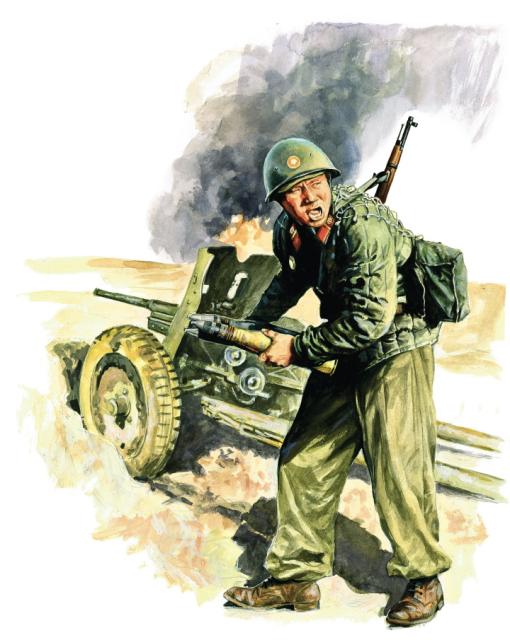
Żołnierz Koreańskiej Armii Ludowo-Wyzwoleńczej w hełmie radzieckim uzbrojony w karabin Mosin-Nagant wz. 1944 produkcji chińskiej. W tle radzieckie działko ppanc. 45 mm

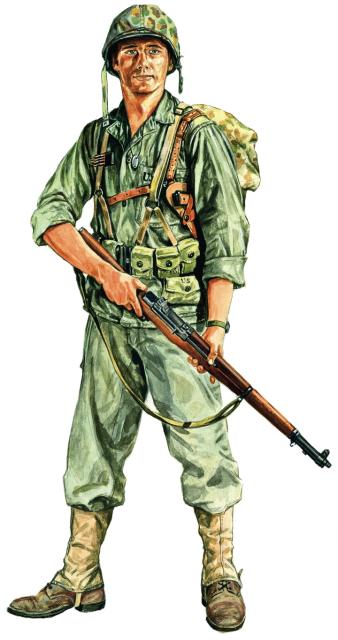
Amerykański żołnierz 1. Dywizji Piechoty Morskiej w hełmie stalowym i mundurze polowym marines. Uzbrojony w karabin M-1 Garand i pistolet M 1911 A1

How war brought Winston Churchill and King George VI together

https://www.thetimes.co.uk/article/how-war-brought-winston-churchill-and-king-george-vi-together-sz5fp92xm
George VI was wary of Churchill after Gallipoli and the abdication crisis. But an acclaimed new life of the wartime PM by Andrew Roberts reveals the two became confidants and, finally, close friends
Churchill entrusted the King with key wartime secrets, knowing there would be no leaks
Churchill entrusted the King with key wartime secrets, knowing there would be no leaksHULTON/GETTY
The Sunday Times, 
In June 1939 King George VI told William Mackenzie King, the Canadian prime minister, that he “would never wish to appoint Churchill to any office unless it were absolutely necessary in time of war”. He gave the example of Gallipoli, an operation that was one of the great allied disasters of the First World War, as showing Winston Churchill’s lack of judgment.
Churchill’s support for King Edward VIII (later the Duke of Windsor) during the abdication crisis in 1936 may have been another reason for King George’s disdain. Churchill had been the most prominent figure promoting a morganatic (unofficial) marriage between Edward VIII and Wallis Simpson, which most establishment figures had considered impossible under British law and practice.

100 Years Ago

https://www.thetimes.co.uk/edition/register/the-captain-who-could-not-be-killed-mlb5t6pc7

The captain who could not be killed

In the fighting of Friday and yesterday the adventures of the American Tanks are a thrilling story. Yesterday I visited the headquarters of a Tank unit — a wooden hut, furnished with but a few camp beds and chairs. The commander told how the Tanks preceded the infantry in the attack, how the enemy with anti-Tank rifles and mobile field guns had fired at point-blank range at the advancing monsters, and how the Tanks, shaking off the opposition as a dog shakes off water, had pressed onward, performing every feat that was asked of them.
There was one captain who led his Tanks on foot through the fog. Suddenly he missed his footing and, falling down a trench, discovered to his dismay that 12 Germans were waiting for him. He was promptly disarmed of his pistol and held as prisoner. But only a few moments had elapsed when the nose of a Tank peeped over the top of the trench. The Germans fled before the apparition and the captain, after recovering his pistol, climbed out of the trench and set forth to resume his command. On his way he was knocked over by a shell, and found lying unconscious on the battlefield. He recovered later, and finding that no bones were broken went off again to find his Tanks. This he eventually did, but a gas shell that burst near him penetrated his mask, and he was gassed. He had no intention of giving in, however, and, in spite of all entreaties, continued to lead his Tanks throughout the day, reporting to the headquarters where I was at 7 at night. “What did he say when he reported?” I asked the commander. “Blank, blank, I wouldn’t have given three cents for my life out there.”
This Tank unit has a mascot, a French boy named Leo Gerard, 14 years of age, from Lorraine. He was picked up in France, dressed in khaki, and has made himself quite the pet of the Tanks. He speaks American, is as brave as a lion, willing to go anywhere, even to the front in a Tank, and generally enjoys himself wandering around the lines making friends with all the officers and men. He told me he wants to go to America after the war to study at a university, and then become an officer in the American Army. He is in good hands, for the majority of the Tank officers are men from Harvard and Yale, and other famous universities of the United States.