Wednesday, 15 August 2018

This Week in History - Bosworth 1485 (18-24 August)

Bosworth 1485 (18-24 August)


'Give me my battle-axe in my hand,
Set the crown of England on my head so high!
For by Him that shape both sea and land,
King of England this day I will die!'

("The Ballad of Bosworth Field", the work of an unnamed supporter of the Plantagenets
from northern England, written sometime during the ten years after the battle)

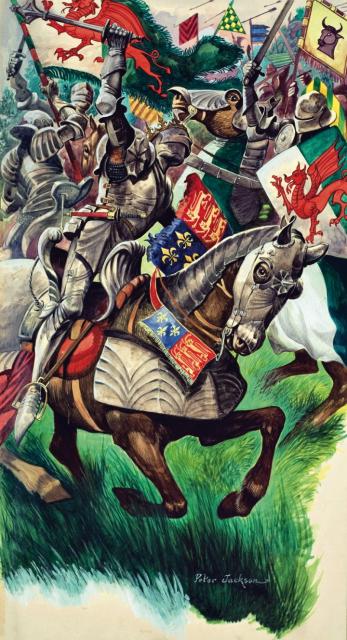
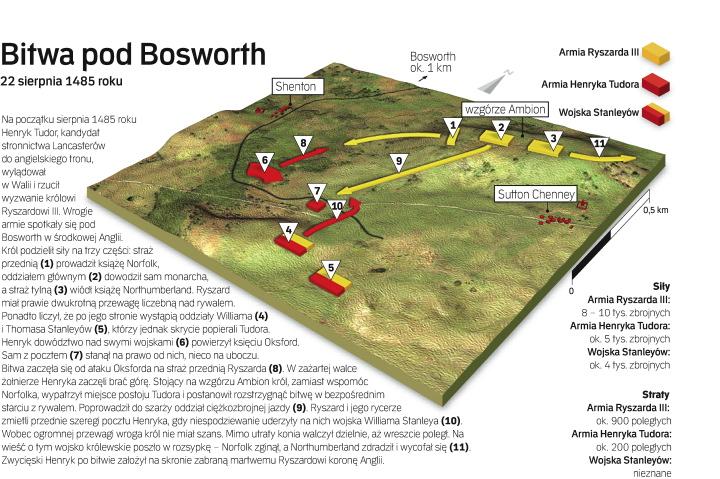
With the battle threatening to turn against him, Richard staked all on a heroic charge with Henry Tudor the objective. He personally killed Henry's standard bearer with his lance, then swept a second defender out of his saddle with a blow of his axe and was very close to his goal. But the momentum of the charge was spent and Richard with his household were gradually overwhelmed. After his horse, already wounded, became trapped in some marshy ground Richard fought on to die bravely on foot. The Tudor victory did not bring the Wars of the Roses to an immediate end. Following his coronation on 30 October, Henry had to deal with a number of real threats and challenges. The last military action took place in 1497 and the last serious plot was eliminated in 1499. The traditional image of Richard III as monstrous king was a Tudor creation motivated by the need to justify the illegitimacy of Henry VII's accession. In truth, Richard served his brother Edward IV and his country well both in peace and war; he was a good and brave soldier. Indeed he seems to have been no worse and was quite possibly a rather better man than his peers, whether friends or enemies.

Further reading

Campaign 66: Bosworth 1485 The Last Charge of the Plantagenets (extract below) is a detailed reconstruction of this pivotal battle and the events and actions immediately preceding it. To place Bosworth in the context of the whole war, Essential Histories 54: The Wars of the Roses 1455-1485 is a compact account of the entire dynastic struggle, which spanned nearly all of the second half of the 15th century as well as the background to the war, and the consequences. Campaign 120: Towton 1461 England's bloodiest battle is a study of the longest and bloodiest battle of the War of the Roses, and another crucial battle of the wars, Tewkesbury, will be covered in Campaign 131: Tewkesbury 1471 The last Yorkist victory to be published in October.

Men-at-Arms 145: The Wars of the Roses. It also surveys the arms and armour, livery and badges of the opposing sides. Warrior 35: English Medieval Knight 1400-1500, (extract below) by the same author and illustrator as Campaign 66, describes the life and experiences of the 15th-century knight from his training as a squire to his involvement in battles in England and France. It also closely examines his dress and weaponry and explores the social mechanisms that attached systems and great families to each other.
Tuesday, 14 August 2018

This Week in History - Napoleon launches assault on Smolensk (17 August 1812)

Napoleon launches assault on Smolensk (17 August)


Fresh from their decisive victory at Salamanca on 22 July, Wellington and his army made a triumphal entry to Madrid. One of his soldiers recalled 'deffening shouts of; "Vivi les Angoles, Vivi les Ilandos"'. 'The inhabitants testified their Joy,' wrote Captain Bragge. However, Private William Wheeler of the 51st complained, 'But amidst all this pleasure and happiness we were obliged to submit to a custom so unenglish that I cannot but feel disgust while I am writing. It was to be kissed by the men. What made it still worse, their breath was so highly seasoned with garlick, then their huge mustaches well stiffened with sweat, dust and snuff, it was like having a hair broom pushed into ones face that had been daubed in a dirty gutter.' Wellington was admitted to the Order of the Golden Fleece, given a large estate near Granada and appointed Generalissimo. He was surrounded by women wherever he went, causing an ensign in the Coldstreams to remark: 'Lady Wellington would be jealous if she were to hear of his proceedings. I never saw him in his carriage without two or three ladies.' After this high point came the failure to capture Burgos and a tough tactical withdrawal in terrible weather to Portugal, leaving the French once again in command of Spain. However, Wellington's successes of 1812 and the drain on French resources caused by Napoleon's activities to the east enabled him to go onto the offensive the following summer with excellent prospects of final victory. 

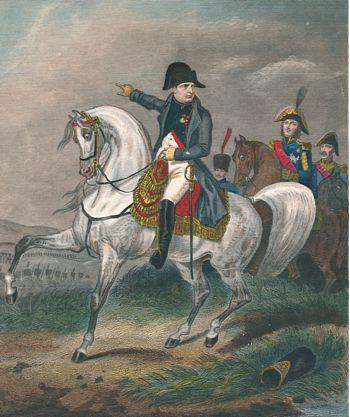
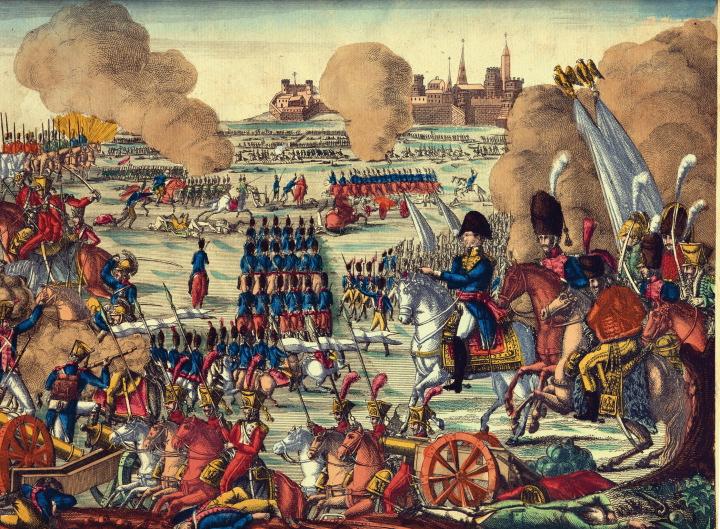
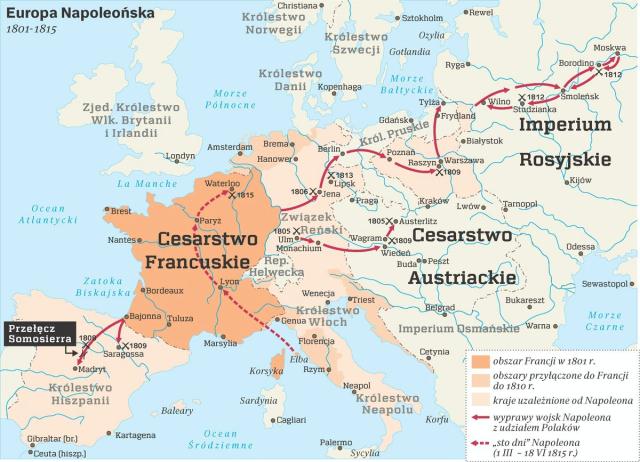
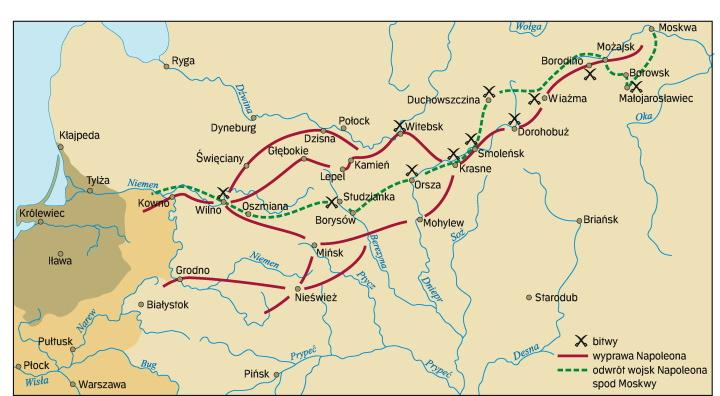
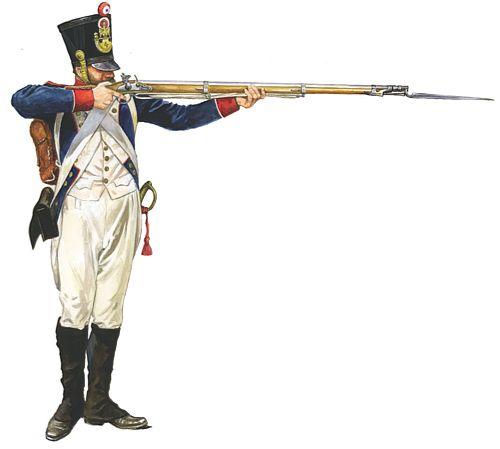
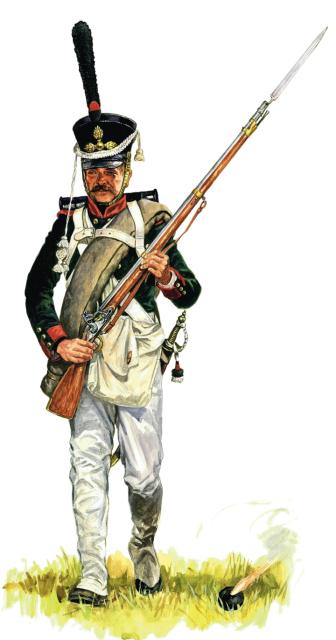
On the same day Napoleon was closing in on the city of Smolensk and on 17 August, he launched his assault on Smolensk just after midday. By 4.30pm, at the end of the afternoon's fighting, Marshall Ney had cleared the southern part of the city and was on the Dnieper. The Russians withdrew the next day but left a key ford unprotected, allowing Ney to cross and immediately harass them. On 19 August Ney engaged the Russian rearguard at Valutino. This turned into a major battle, which could have been decisive, if Junot and Murat had appreciated the opportunity to outflank Barclay, taken the initiative and fully committed their Corps. As it was, the Russians extracted themselves and fell back further east with some protection from the weather. They were to stand and fight next at Borodino on 7 September and on 14 September Napoleon had won his empty and fatal trophy, Moscow.

Monday, 13 August 2018

Sir VS Naipaul obituary

Nobel prizewinning author whose books posed profound questions about the postcolonial world

VS Naipaul in 2001, the year he was awarded the Nobel prize for literature
Did VS Naipaul set out to cause offence, or did it happen by accident? Few would take issue with the Nobel prizewinner’s immense talent as an author, yet he also succeeded in getting up the noses of almost everyone he encountered, becoming English literature’s greatest postcolonial writer and a pariah to the postcolonial literary world, who no doubt felt that he had taken on the values of the old colonial masters.
For many his best book was A House for Mr Biswas (1961), which tells the story of one man’s lifelong struggle to create meaning and permanence out of poverty and insignificance. He never made any secret of the fact that the story was based on the experience of his father and his conflict with a large clan of Hindu relations ranging from landowners to labourers.

Friday, 10 August 2018

Reginald ‘Titch’ Snowling - obituary

Gunner who was probably the shortest man to land on the D-Day beaches and later blew up two German tanks with one shell

Reginald ‘Titch’ Snowling with his medal last year
At 4ft 11in tall, Reginald “Titch” Snowling was almost certainly the smallest soldier to land with British forces in Normandy on D-Day, June 6, 1944, and was also unique in knocking out two German Panther tanks with a single shot.
Afterwards Snowling said: “The tanks just blew up. When our Rifle Brigade went up in their half-tracks to have a look, there was nobody left alive. The officer in charge came back and asked, ‘Who fired that shot?’ And when told it was me said, ‘Make sure he gets a Military Medal.’ But I never got one.”

100 Years Ago

A brilliant success

Troubles are multiplying for the Germans. Today, with French cooperation, we launched the first offensive on a large scale this year, recalling the great attacks of the Somme, the battle of Arras, or that of Flanders. It was admirable in its organization and execution, taking the enemy completely by surprise.
The attack was made by the Fourth Army, under the command of General Sir Henry Rawlinson, in conjunction with French troops, both being under command of the British Field Marshal Commanding-in-Chief. The front of attack was about 15 miles, of which British troops had charge of the northern 12 miles from near Mericourt to a point south of the River Luce and the Amiens-Roye road below Hangard, while the French extended the attack for another three miles to and across the River Avre. The time chosen was half-past 4 this morning.
It was an anxious night, for we had no idea whether the Germans had any warning of our plans. They took some prisoners in the fighting below Morlancourt two days ago, and it was possible that these men might have given some information away. From prisoners, indeed, we gathered that the Germans anticipated some sort of local operation hereabouts some time soon, but they had no inkling that the blow was to come so quickly, or that it was to be of anything like the shattering force with which it was delivered. The night passed well, therefore, and when the critical moment came there was no sign of apprehension on the enemy’s part. Then, out of the silence, it sounded to onlookers as if our barrage was as splendid and as heavy as any that the war has known. It lasted only for a few minutes before the attack started, but those few minutes were enough to flatten the enemy defences and to leave him stunned and naked. Our men as they went forward all seem to have had the same impression of the enemy being completely smothered, so that only scattered machine-guns here and there opposed our advance in the frontline positions, and these were easily accounted for either by Tanks or infantry with the help of smoke screens. Tanks joined in the attack everywhere, and did magnificent service. In little more than two hours we had heard of the capture of the whole tier of nearer villages.

The new allied offensive

The new Franco-British offensive under the command of Sir Douglas Haig on the Allied front before Amiens is one of the greatest and most gratifying surprises of the war. It surprised the British public just as much as the enemy for, with the exceptions of the battles of Messines and Cambrai, never has a secret been better kept. Most people have been speculating about the possibility of an early German attack in the neighbourhood of the Lys, and the whole country hailed with deep delight the news that on Thursday the British Fourth Army and the French First Army had struck swiftly and deeply astride the Somme, and between the Somme and the Avre.
From the outset the attack went forward at unusual speed. The new “whippet” tanks and squadrons of armoured cars greatly assisted the infantry in their rapid advance. No offensive in which the British Army has participated has made so much progress on the opening day. By nightfall Amiens was free from the danger of any recurrence of the bombardment which has wrought so much destruction. The advance of the French on the right has freed the main railway line to Paris from menace, and yesterday trains were once more running from Amiens to St Just. All the testimony tends to show that the rout of the Germans was complete, at any rate in the broad centre of the attack. By noon yesterday the count of prisoners had reached 17,000, 4,000 taken by the French and 13,000 by the British. The number of guns captured is estimated at between two and three hundred. This battle differs from any in which we have engaged, for tanks and cars, and even cavalry, are operating considerably in advance of the main fighting line. We know that the Germans have suffered one of the worst reverses since the war began. The prospects of effective retaliation on a great scale in the West this autumn are diminishing. For the moment the initiative has clearly passed to the Allies. The plans of Hindenburg and Ludendorff are more deranged than ever, and the outlook for the Allies was never more promising. We may add that though our total casualties are said to be light, last night’s aviation report showed that losses among our gallant young airmen are exceptionally heavy. Fifty of our machines are reported as “missing”.

Thursday, 9 August 2018

The Times History of the War - The Battles of Amiens and Bapaume, August 1918

The Battles of Amiens and Bapaume, August 1918
This week's chapter examines the Battle of Amiens resumed, work of the cavalry and tanks, defensive tactics, Ludendorff's order, Humbert's attack towards Lassigny, Allies reach the line of 1917, King's visit to the Front, German damage to Amiens, Lassigny captured, enemy withdrawal on the Ancre, German comment on the fighting, British dispositions, opening of the Battle of Bapaume, progress of the attack, work in the air, fall of Albert, Thiepval ridge carried, air fighting in August.
At one point the French had some difficulty with a village which was heavily defended with machine-guns, many of which were in the upper stories, which held them up for a time. Five of the heavy tanks were brought up and proceeded to demolish the houses from which the fire came. In this way 10 houses were dealt with in succession

Wednesday, 8 August 2018

Jack Tredrea obituary

Commando who led a platoon of headhunters in Borneo, but did not get the message that the war had ended in August 1945

Jack Tredrea was part of the elite Z Special unit during the Second World War
Emperor Hirohito had announced Japan’s surrender in mid-August 1945 and the Second World War was officially finished, but no one had told an Australian commando who was leading a platoon of headhunters against Japanese forces in the Borneo jungle.
Warrant Officer II Jack Tredrea fought on, continuing to harass and ambush the enemy with rifle fire, grenades, parangs and a silent assault by poison dart propelled from a blowpipe.