Monday, 19 February 2018

Charles Saatchi's masterpieces: how Goya rewrote the rule book of the female nude

http://www.telegraph.co.uk/art/what-to-see/charles-saatchis-masterpieces-goya-rewrote-rule-book-female/


Francisco Goya (1746‑1828) was born when Spanish art was at a low ebb. The genius of the 17th‑century master Velázquez had been followed by generations of anaemic mediocrity.
As a teenager, Goya liked to spend his time sketching in the fields near Saragossa. One day, a passing monk, reciting his breviary, stumbled across the young artist making charcoal drawings. Struck by Goya’s aptitude, he immediately asked the boy to take him to speak to his parents. It didn’t take long to persuade them that Goya should enter an apprenticeship with a prominent studio. In all possibility, that fortuitous meeting awakened the latent brilliance of the artist and ushered in a renaissance in Spanish painting.
Goya was an intensely keen observer of humanity, using his brush and pencil to tell the vivid stories of the people of Spain, and the restless life of the city. His representations of women were numerous and all-encompassing: covens of witches, beautiful maidens, mistresses of powerful men, milkmaids, gipsies. None of these was more notorious than Goya’s La Maja Desnuda, The Naked Maja.
In this painting, made between 1797-1800, Goya rejected the traditional, stoically frigid representations of the female nude. Instead, inspired by Titian’s audacious Venus of Urbino that had so horrified 16th-century Italy, Goya chose to abandon the suggestion that he was innocently portraying a goddess. He wanted anyone looking at his naked model to be fully aware that she was a woman of the lower classes, a maja, a person considered a commoner in Spanish society. This was no Divinity basking upon the canvas, rather a woman of the people with a highly sexualised, almost aggressive gaze, staring back at the viewer directly and provocatively.

Friday, 16 February 2018

100 Years Ago - Victoria Cross


THE BREACHING OF THE VIADUCT CONNECTING THE MOLE AT ZEEBRUGGE

WITH THE LAND BY SUBMARINE C.3 (LIEUT. SANDFORD, R.N.).


SERGT. ALBERT MOUNTAIN (left), West Yorkshire RegilJlent, and PRIVATE THOMAS

YOUNG, Durham Light lnfantry.


Photographed after receiving their Crosses in: the Courtyard of Buckingham Palace


PRIV ATE (Corporal) BEESLEY (Rifle Brigade), RECEIVES HIS VICTORIA CROSS AT

THE HANDS OF THE KING IN FRANCE.


PUBLI'C WELCOME TO ABLE SEAMAN A. E. McKENZIE IN SOUTHWARK


Dare-devil courage

We steamed through the smoke screen, and then we caught Hell. There is no other word for it

Deal, April 24. Survivors of the special battalion of Royal Marines who took part in Monday night’s enterprise are still dribbling back here in small parties. I visited the depot this morning, and the majority of the survivors were drawn up in the drill hall answering the roll-call. All the men showed signs of having been through some hazardous ordeal, but they make light of their injuries and are as cheerful as could possibly be. The most connected account of the undertaking was given to me by two officers, both of whom made light of their own gallant share in the venture, and of their many wonderful escapes during the hour of fierce combat on the Mole.
Both these officers, whose names I am asked to withhold, are loud in their praises of the conduct of all ranks. In their own words, “It was a desperate adventure, carried out with dare-devil courage.”
Both officers belong to the Plymouth Company and this was the third landing in which each had taken part during the war. Their story was as follows:
We were on board the Vindictive, and we arrived at our allotted position. In accordance with plan, we approached under cover of our own smoke clouds. All the vessels, large and small, took part in this ingenious device, the smaller craft letting out as much smoke as their larger consorts. In fact there was a veritable blanket of smoke stretching from Zeebrugge to Ostend. The black, impenetrable wall of smoke completely deceived the Hun for a time, but when he discovered what we were about he put up star shells, and then we had no alternative but to go ahead. We steamed through the smoke screen, and then we caught Hell. There is no other word for it.
THE LANDING.

All our men were on deck, and the Germans shelled the Vindictive without cessation for 20 minutes. Despite this terrific fire wc carried on, but when we got alongside the Mole we found that out of 14 prows, or gangways, which we had on board only two were of any use, all the remainder having been shot away. There was nothing for it but for our storming party to land by these two prows, damaged and shaking as they were.
With a clear “Over you go, Royals” our men effected a landing on the first ledge of the Mole, but we lost heavily in the process, for the shellfire directed against us was terrible.
After reaching the first ledge we had another drop of some 20ft to negotiate before we could get at grips with the enemy. To make matters worse, it was raining heavily all the time. Undaunted, we lowered ourselves by means of ropes and rope-ladders. Three Hun destroyers lay alongside the other side of the Mole, and all three of them kept firing at the Vindictive at close range, so it became necessary to silence them first. From these boats the German sailors came swarming up to attack us, but they found themselves face to face with British pluck, and with a cheer our men charged. This was more than Fritz could stand. Clearing a space, we dashed up to the first destroyer, into which we threw some 50 hand bombs. A loud explosion followed, and the last we saw of her was that she was on fire and sinking. We were unable to reach the other two destroyers, and what became of them we do not know.
The Vindictive had three howitzers on board - one in front, one amidships, and the other aft - and before we left the foremost gun’s crew was wiped out three times in succession by the guns from the shore. But our own gunners on board did extremely well. An abundance of shells were put ashore from howitzers, pom-poms, and Stokes guns, creating considerable havoc among the Germans.
After setting fire to the destroyer we formed up and forced our way ashore at the point of the bayonet. We attacked the gun’s crew on shore which had been giving us so much trouble, and after killing a large number, dispersed the rest and captured the guns. Our men behaved magnificently. Meanwhile the Vindictive was being shelled, and she was heavily engaged with the shore batteries, when we received by siren the signal to withdraw the block ships had by this time been sunk, and our object had been accomplished.
During the whole of the engagement oue of our sergeant-majors worked a gun in the foretop of the Vindictive with consummate skill and bravery, firing round after round at the enemy and creating considerable havoc and destruction. He claims to have made a direct hit on the face of one of the enemy’s searchlights, thus putting it completely out of action.
“WELL DONE, VINDICTIVE!”
The captain of the Vindictive was a fine seaman. With the utmost coolness he gave his orders from the bridge, in spite of the flying and bursting shrapnel all round him. With the greatest skill he managed his ship and got her safely out, covered by the smoke screen which we emitted as we steered down the Channel for home.
We met just at daybreak the warship in which was Vice-Admiral Keyes. The admiral signalled to us, “Well Done, Vindictive!” and both crews cheered themselves hoarse as the ships passed each other. We arrived at Dover at 8.30 on Tuesday and on entering the harbour we received a splendid ovation from the crews of the ships there, and also from a large number of the inhabitants. One of the finest achievements of the engagement is credited to British submarines.
Two of our oldest boats managed to get in under the viaduct at Zeebrugge, and placed some 10 tons of explosives under the shore end of the viaduct which connects the Mole with the shore, blowing it up and preventing reinforcements coming from the shore. After getting their boat into position the submarine’s crew set the time-fuse and escaped in small dinghies.

100 Years Ago - Kipling and Trotsky


Trotsky’s excuses for surrender

M Trotsky is endeavouring to carry off with a high hand the humiliation of Bolshevism at Brest-Litovsk. In a characteristic message addressed to the world in general he explains that the tacit acquiescence of the Entente bourgeoisie enabled the German capitalists to impose upon the Bolshevists terms which they could not accept. At the same time the Bolshevists could not think of continuing to make war against their German and Austrian “comrades”. Orders have accordingly been issued for the complete demobilization of the Russian Army. The disciplined mind of the German bureaucracy, confronted with a vacuum, is beginning to exhibit symptoms of irritation, and M Trotsky is threatened with direct consequences if he persists in his refusal to “sign”.
The following Russian Wireless message, addressed “to all whom it may concern”, was received in London yesterday: Comrades, The peace negotiations are at an end. German capitalists, bankers, and landlords, supported by the silent cooperation of the English and French bourgeoisie, submitted to our comrades, the members of the peace delegation at Brest-Litovsk, conditions such as could not be subscribed to by the Russian Revolution. The Governments of Germany and Austria desire to possess countries and peoples vanquished by the force of arms. To this the authority of the Russian peoples of workmen and peasants could not give its acquiescence. We could not sign a peace which would bring with it sadness, oppression, and suffering to millions of workmen and peasants. But we also will not continue a war which was begun by Tsars and capitalists in alliance with Tsars and capitalists. We will not, and we must not, continue to be at war with Germans and Austrians — workmen and peasants like ourselves. We are not signing the peace of landlords and capitalists. Let German and Austrian soldiers know who are placing them in the field of battle, and let them know for what they are struggling. Let them know also that we refuse to fight against them. Russia, for her part, declares the present war with Germany, Austria-Hungary, Turkey, and Bulgaria at an end.
(Signed) L. Trotsky, President of the Russian Peace Delegation, and Commissioner for Foreign Affairs.

Wednesday, 14 February 2018

This week in history - Verdun

https://ospreypublishing.com/thisweekhistory/


Verdun 1916 (21 February)

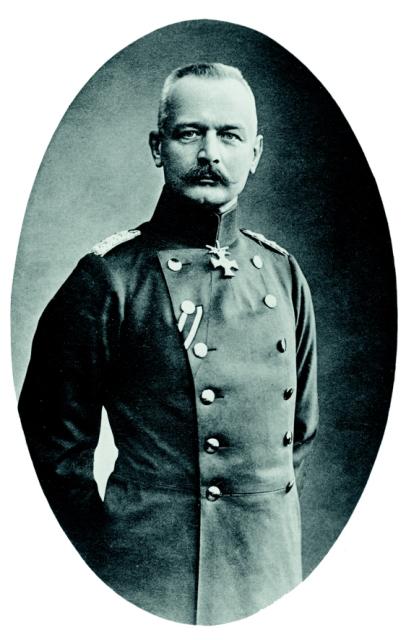
At the end of 1915 both the Germans and the Allies were developing plans, for the following year, to break the deadlock that gripped them. The Allies' strategy was three-pronged: the French and British were to mount a summer offensive across the Somme whilst other forces put new pressure on the Central Powers on the Italian and Eastern Fronts. The Germans decided on a strategy of attrition directed specifically at France. General Erich von Falkenhayn, Chief of the German General Staff, who believed this was their best if not only option, reasoned, 'If we succeed in opening the eyes of their people to the fact that in a military sense they have nothing more to hope for ... England's best sword would be knocked out of her hand. To achieve this object the uncertain method of a mass breakthrough, in any case beyond our means, is unnecessary. We can probably do enough for our purposes with limited resources. Within our reach behind the French sector of the Western Front there are objectives for the retention of which the French General Staff would be compelled to throw in every man they have. If they do so the forces of France will bleed to death - as there can be no question of voluntary withdrawal - whether we reach our objective or not.'

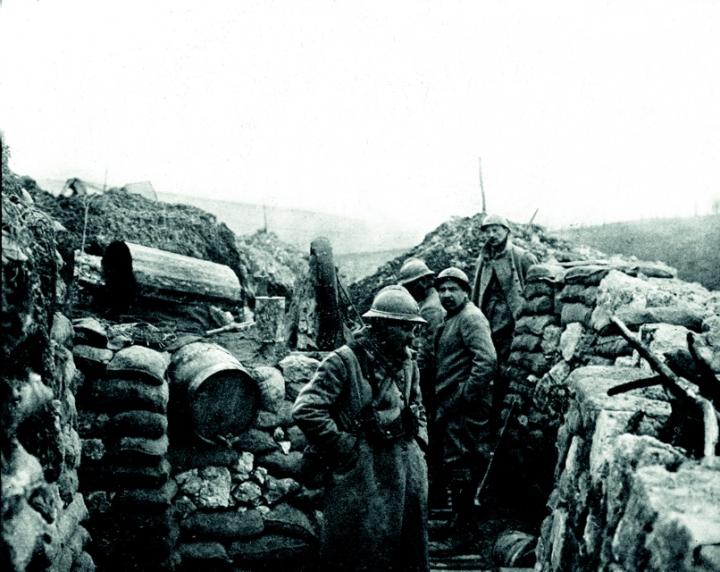
Falkenhayn chose Verdun as his killing ground and Germany struck first. Verdun was a historic keystone in France's frontier defences against Germany. Dating from Roman times, it had changed hands on several occasions, falling to the Germans the last time in the Franco-Prussian War. When the attack began on 21 February 1916, the French were not well prepared but they were better prepared than they would have been had severe winter weather not caused the attack to be postponed from its original date of 12 February. Even so, after the first four days of fighting the French situation would have been desperate, but for some heroic resistance at key points, and the Germans' lack of reserves and over-cautious exploitation of their early gains.
Erich von Falkenhayn (1861 – 1922)

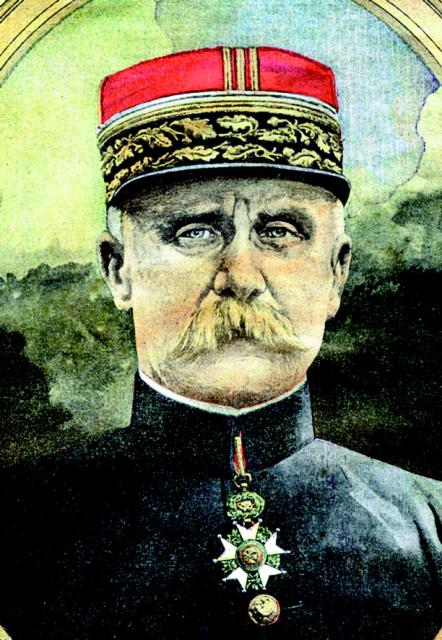
Philippe Pétain (1856 – 1951)
Żołnierze francuscy w okopach pod Verdun

Charles Saatchi's Great Masterpieces: how Matisse made flatness fabulous

http://www.telegraph.co.uk/art/artists/charles-saatchis-great-masterpieces-matisse-made-flatness-fabulous/


The Red Studio, painted in 1911 by Henri Matisse 

Trained as a lawyer, Henri Matisse discovered in a somewhat unconventional way that he was fated to be an artist. When he was 21, and suffering from a severe bout of appendicitis, his mother bought him some art supplies to relieve his boredom as he lay in bed. He started painting, and, “from the moment I held the box of colours in my hands, I knew this was my life. I threw myself into it like a wild animal.”
Matisse’s mother encouraged him to not adhere to the “rules” of art, but rather to rely on his emotions, and attempt to express them powerfully. Throughout his long life (he died aged 84, in 1954) he remained forever faithful to his work, even warning his wife, Amélie Parayre: “I love you dearly, mademoiselle; but I shall always love painting more.”